
In the travel and hospitality industry, customer service statistics can’t be ignored. Customer experience isn’t just a differentiator—it’s a growth engine. While many brands focus heavily on acquisition, the facts about customer service are that loyalty, retention, and customer lifetime value (CLV) are won (or lost) through service.
And in 2025, customer service is no longer a reactive function—it’s a strategic imperative.
This article explores 25 essential customer service statistics every travel brand should know—and what they mean for enterprise leaders looking to transform CX into a competitive advantage.
TL;DR: Key Takeaways
- Digital fluency, language accessibility, and seamless escalation paths are now expected in all service interactions.
- Brands that fail to personalize or localize support risk not only poor satisfaction scores but also churn.
- Real-time, multilingual support powered by AI isn’t optional—it’s table stakes for global travel brands.
Customer Service Statistics & Trends
First, let’s look at general customer service and experience trends. While not specifically focused on travel, these data points apply to customer support expectations across all industries, including tourism, travel, and hospitality. What’s clear is that enterprises must use these customer service facts to their advantage.
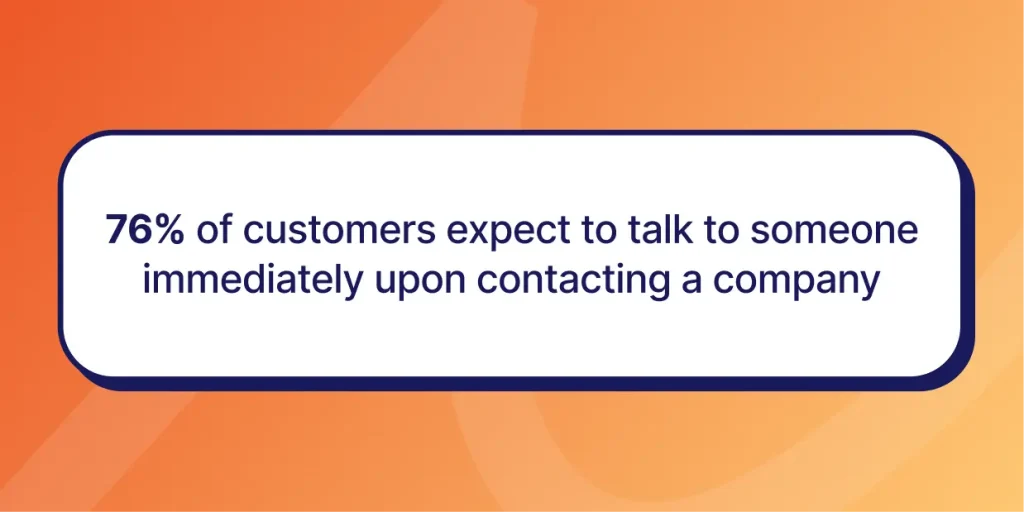
- Among some other important call center statistics, 76% of customers expect to talk to someone immediately upon contacting a company (Zendesk)
- 81% of customers say a positive customer service experience increases the likelihood of making another purchase (Zendesk)
- One out of every five customers feels that contact center wait times are too long (Freshworks). This is a key area where conversational AI in customer service can help brands reduce wait times while improving responsiveness.
- 74% of customers will forgive an organization’s mistake after they receive excellent customer support (Zendesk)
- Regarding self-service, 88% of customers expect brands to offer customer self-service online (Statista)
- Omnichannel service is critical: 72% of consumers expect brands to know their purchase history regardless of the communication method they are currently using (CX Today)
- Data privacy cannot be overlooked—71% of web users have indicated they do not want brands to use AI to improve the customer service experience if it threatens to infringe on their privacy
- 68% of consumers will spend more with a brand that they feel understands them and treats them like ‘an individual’ (Khoros)
- 74% of customers are more likely to purchase from a brand again if they receive support in their own language, while 40% will straight out not buy from a brand whose website does not have content in their own language (CSA Research). This is just one reason why travel brands are turning to real-time translation software to support multilingual customers efficiently.
These aren’t just fun facts about customer service. They clearly show that customers are demanding outstanding experiences across the board, from personalization to localization. Brands must match these expectations, or else their customers will walk.
Traveler Expectations for Customer Service
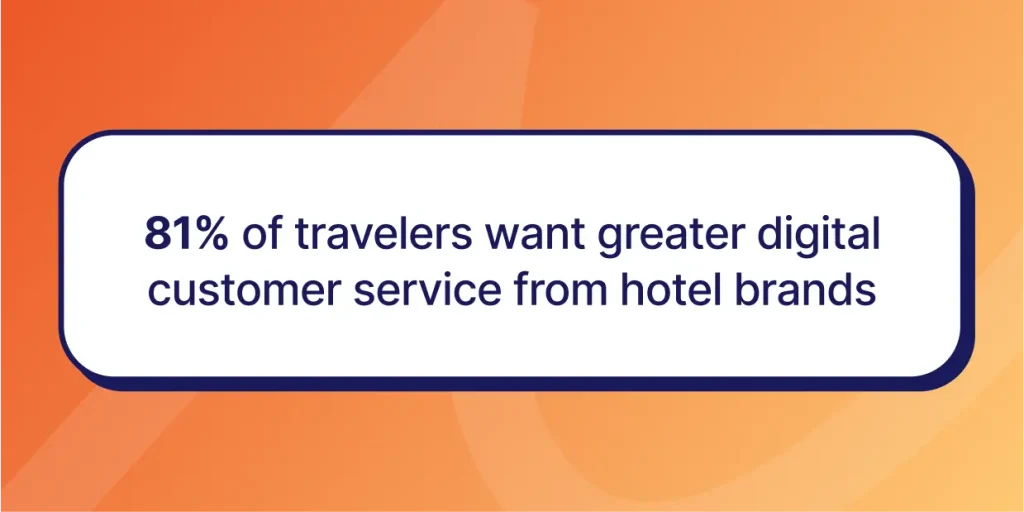
Now, let’s focus on some customer service stats relating to travel, including bad customer experience statistics.81% of travelers want greater digital customer service from hotel brands (Finances Online)
- 79% of consumers say that personalized service from a travel brand is more important to them than personalized marketing
- 60% of travelers state they will switch travel brands after experiencing just 1-2 poor customer service experiences (Travel Daily News)
- Email remains the most popular communication channel among travelers, with 34% of consumers indicating a preference for it when communicating with travel brands (Loqate)
- Just over half (55%) of travelers expect travel brands to have a record of their reservation history when contacting customer support.
- When choosing a brand to book travel with, customer support is the number one priority for 60% of travelers.
- A mobile presence should not be overlooked: 19% of travelers prefer to be contacted via in-app messaging, while 16% prefer communication directly via SMS (Loqate)
- 67% of customers feel that technology advancements will positively impact their relationships with travel & transportation companies (Salesforce)
- 83% of travelers who use self-service solutions such as FAQs or chatbots want to be able to seamlessly transition to a support agent if needed, without having to repeat themselves (Gladly)
These stats on customer service in the travel industry clearly demonstrate that technology has become increasingly essential to the customer experience. Brands must ensure their customer support incorporates the most up-to-date technology to provide satisfactory solutions.
How Travel Brands Are Stacking Up
Here are some essential customer satisfaction statistics showing how travel brands are (or aren’t) performing when it comes to customer service.
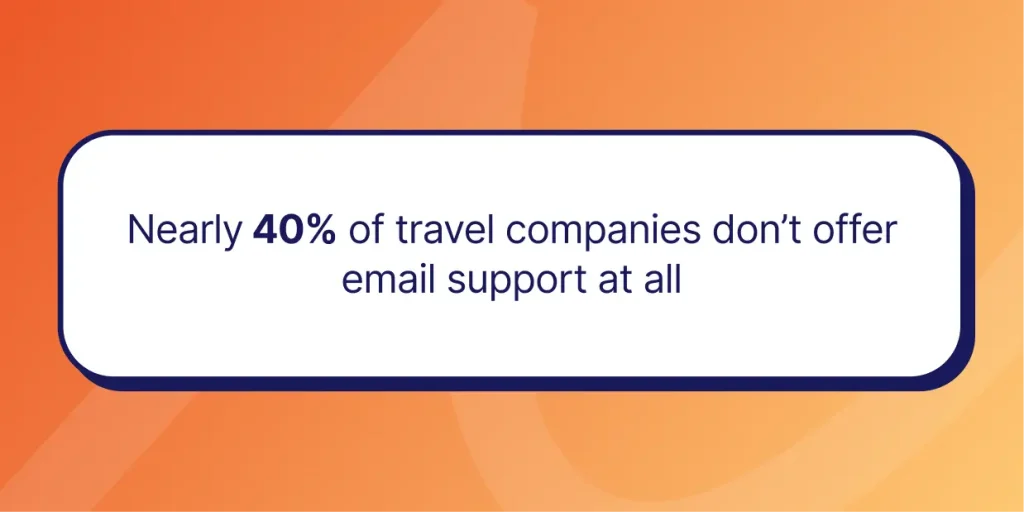
- Nearly 40% of travel companies don’t offer email support at all (Netomi)
- Just under half of consumers (46%) report their recent experience calling a travel/hospitality brand was “just OK,” while an additional 20% say it was “slow and frustrating.” That’s 66% of travelers feeling less than positive about their experiences with travel brands (Travel Daily News)
- When interacting with travel brands, almost two-thirds of customers (64%) feel like they are just a ticket number to the customer service agent (Gladly)
- About 60% of travel brands say they offer customer support via chat, while 28% are experimenting with or using artificial intelligence (PhocusWire)
- When it comes to email responses, 32% of travel brands respond to emails within the first 60 minutes. 57% respond within the first 3 hours, and 85% respond within the first 24 hours (Netomi)
- The average email response time in the travel industry varies depending on the type of company. Both hospitality companies (such as hotels & resorts) and travel agencies’ average email response time hovers around 12.5 hours, while airlines average 16.3 hours, and cruises come in at just under 24 hours (Netomi)
- Fewer than a third (30%) of cruise lines provide customer support on both email and social media channels (Travel Daily News)
Bundle: The Ultimate Guides to Multilingual Customer Support
This bundle offering contains three guides covering how to best provide multilingual support over live chat, email, and chatbots.
These statistics about customer service and travel brands show how there’s still a lot of work for brands to ensure they’re providing the very best customer support. Poor customer service statistics, for example, the lack of digital support among cruise liner brands, demonstrate that there is still a game of catch-up in 2025.
Rethinking Service: Multilingual, AI-Driven, and Channel-Agnostic
One of the most overlooked drivers of poor customer experience in the travel industry is language mismatch. With 74% of consumers saying they won’t buy from a brand that doesn’t offer service in their own language (CSA Research), multilingual support is not a luxury—it’s a requirement.
Yet, too many brands still rely on monolingual agents, limited translation tools, or slow, manual escalation processes.
Enter: Language IO. Our AI-powered platform enables real-time multilingual support across live chat, email, social, and ticketing—without requiring fluency from your agents.
We empower travel brands to:
- Translate live conversations across 150+ languages instantly
- Leverage AI to route queries through the best machine translation engine (DeepL, Google Translate, etc.)
- Retain brand voice and terminology through smart glossary integration
- Comply with GDPR and avoid the security pitfalls of free translation tools
Final Thoughts: Why Travel Brands Must Treat CX As a Strategic Asset
It’s time to stop treating customer service as an afterthought and start treating it as a revenue enabler. The data is clear: brands that deliver fast, personalized, multilingual support are winning the loyalty—and wallets—of global travelers.
Travel moves fast. Your service model should move faster.
FAQs
Why is customer service more important than ever in 2025?
Customer service is just as important in 2025, if not more so than ever. That’s because customer experience has become the ultimate differentiator in saturated markets. In 2025, service is no longer just a support function—it’s a primary driver of brand loyalty, revenue retention, and reputation.
As travelers expect real-time, personalized, multilingual support, outdated service models directly translate into lost business and brand erosion.
What percent of clients leave because of poor customer service?
According to Travel Daily News, 60% of travelers switch travel brands after just 1–2 negative service experiences. In industries with high customer lifetime value (CLV), such as hospitality and travel, this attrition has serious long-term financial consequences.
Investing in customer support isn’t just a cost center—it’s risk mitigation.
What are the consequences of losing customer trust?
Loss of customer trust results in reduced retention, lower lifetime value, increased acquisition costs, and a negative brand perception.
Additionally, 64% of travelers report feeling like just a ticket number when interacting with travel brands (Gladly), which not only undermines loyalty but actively drives churn.
What are the top predictions for customer service in 2026?
By 2026, we can expect to see:
- AI-first customer service strategies with human escalation paths
- Mass adoption of multilingual, real-time translation across channels
- Unified CX platforms that integrate data across touchpoints
- Greater regulation and expectations around customer data privacy in service interactions
These trends signal a shift from siloed tools to intelligent orchestration platforms.
How to turn customer feedback data into actionable insights?
The results don’t lie. Social media customer service statistics, customer support statistics, and customer satisfaction stats all show the same picture: Enterprises need to go beyond surveys and NPS scores.
This means using AI-powered tools to analyze unstructured customer feedback (support tickets, chat logs, reviews) in real time. Also, mapping sentiment and intent to specific service touchpoints and prioritizing investment in areas that drive the most customer friction or delight.