As digital communication grows exponentially, the demand for secure machine translation becomes increasingly critical.
It’s important to keep data private and secure while translating documents and information, especially with sensitive data. Using unsecured translation tools can significantly increase the chances of data being exposed.
Organizations should assess their machine translation software to make sure it aligns with compliance standards such as GDPR and ISO 27001.
In this article, the focus will be on strategies to enhance secure machine translation and lessen the associated risks.
TL;DR
- Secure machine translation services prioritize data protection, ensuring that documents and texts are not accessible to unauthorized parties. Adherence to GDPR and other security standards is essential.
- Cutting-edge technology, such as neural networks and LLMs, enhances translation accuracy and speed. Compliance with ISO 27001 and SOC 2 Type II demonstrates commitment to security and reliability.
- Advanced models like DeepL and Tower support a wide range of languages, providing precise translations for both individuals and businesses. Innovation in these models focuses on nuance and context.
- Confidentiality in document handling is crucial. Machine translation solutions must never use personal data to train models, maintaining privacy and trust.
What Is Machine Translation Security And Why Does It Matter?
Machine translation security refers to the measures and protocols put in place to protect sensitive data during the translation process. This involves safeguarding data from unauthorized access and breaches.
Ensuring that machine translation systems are secure is important because they handle a wide range of sensitive information, from personal emails to corporate documents.
Data breaches can lead to significant financial losses and damage to a company’s reputation.
The global average cost of a data breach is substantial, making it imperative for businesses to prioritize security in their machine translation processes.
Secure machine translation helps in protecting intellectual property and confidential information.
Companies need to differentiate between security and compliance. Compliance outlines the regulatory standards that must be met, while security comprises the practical steps taken to protect data.
Both elements are critical, but having robust security measures in place is a key component of complying with data protection regulations.
Utilizing secure machine translation systems requires updated technology and effective oversight.
Risk factors like outdated software and poor security training can expose organizations to threats.
Companies should ensure their systems are well-maintained and operated by individuals who are trained in the latest security practices.
A lack of proper security measures can result not only in data breaches but also in losses of revenue due to unchecked translations that might not correctly convey the intended message.
Protecting data during machine translation is therefore an essential aspect of preserving both integrity and business continuity.
How Secure Is Machine Translation?
Machine translation security primarily involves how data is handled during the translation process.
Companies can opt for an on-site machine translation engine to ensure data does not leave their premises. This setup provides a high level of control since the data remains within the internal network.
Another secure option includes using cloud-based, individual translation services.
These services offer secure, encrypted data communication, ensuring that data is protected during transmission.
Companies must choose providers known for robust security measures to safeguard their sensitive information.
Key Security Measures:
- Encryption: Ensures data is secure during transmission.
- Access Control: Limit access to authorized individuals.
- Data Anonymization: Remove or anonymize sensitive information before translation.
For those seeking heightened security, investing in a premium machine translation service can be beneficial.
They offer encrypted data transfer and often do not store data permanently. This approach maintains data sovereignty, keeping control with the user.
Users should be cautious about poorly linked computer systems as this can be a point of vulnerability.
Well-configured systems and security protocols are essential to reducing risks associated with machine translation.
It’s often beneficial to oversee the machine translation process, especially when it’s used for critical tasks.
Although machine translation systems are sophisticated, human translators ensure accuracy and preserve the linguistic context, minimizing the risk of misinterpretation.
5 Security Risks Related To Free Online Translation & How To Mitigate Them
1. Data Privacy Concerns
Free online translation tools often require uploading sensitive documents. While the data is uploaded, it can be mishandled or exposed.
To mitigate this risk, use services with strict privacy policies or use local software solutions that don’t rely on cloud uploading.
2. Unprotected Data Transmission
Data sent through unsecured networks can be intercepted. Public Wi-Fi hotspots are often particularly risky.
To minimize the risk, use secure VPN connections when transmitting sensitive information or use translation services that provide end-to-end encryption.
3. Retention of Translated Content
Some services may store translated content, risking unauthorized access or misuse.
Opt for translation providers that offer clear data deletion policies. Regular audits of the service’s data handling practices can ensure compliance with privacy standards.
4. Potential Misuse of Input Data
When data is processed, some platforms may use it for artificial intelligence training without explicit consent.
Select services that specifically state that they don’t use data without consent.
5. Software Vulnerabilities
Online translation platforms can be targets for cyberattacks. Ransomware and other malicious activities are significant threats.
Regularly update any translation-related software and choose providers with robust cybersecurity measures in place. Implement multi-factor authentication for added security.
How Language IO Ensures Secure Machine Translation
Language IO prioritizes security in its translation services by implementing multiple protective measures.
They undergo regular security audits and employ quarterly penetration tests, weekly vulnerability scans, and continuous intrusion prevention and detection.
Compliance with data protection regulations is a significant aspect of their service.
Language IO’s technology is fully aligned with GDPR standards, ensuring the data privacy and security of their users.
In the realm of certification, Language IO stands out as the only vendor in the multilingual support market certified against the latest ISO-27001 standard.
This certification highlights their commitment to maintaining stringent security practices.
The integration of secure machine translation into customer support is facilitated by their real-time AI translation technology, which emphasizes both accuracy and security.
Through this secure translation service, Language IO provides clients with the support and tools they need without compromising customer data or brand integrity.
Clients in need of a security-focused translation service can be assured that Language IO is dedicated to safeguarding their data and interactions.
Their commitment to security is reflected not only in their technology but also in the processes and people they rely on to uphold these standards.
This focus on security ensures that Language IO effectively meets the needs of businesses that prioritize data protection in their translation services.
GUIDE: Security in an AI-driven landscape
A practical guide for CX leaders
Final Thoughts On Using Secure Machine Translation
Using secure machine translation is essential to protect sensitive data from unauthorized access, particularly as businesses increasingly rely on digital communication.
Companies must balance robust security measures, such as encryption and access control, with compliance to regulations like GDPR and ISO 27001.
Leveraging secure services or on-premises solutions minimizes risks, while regular audits and human oversight enhance reliability and context accuracy.
As machine translation evolves, organizations should prioritize security to safeguard data integrity and maintain trust, ensuring both business continuity and compliance with global standards.
FAQs
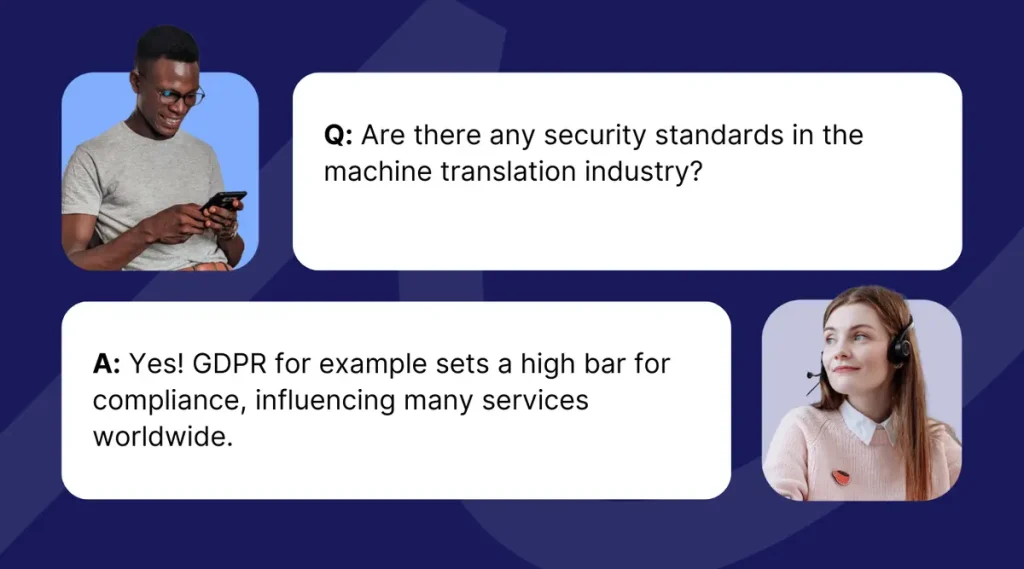
Are There Any Security Standards In the Machine Translation Industry?
In the machine translation industry, security standards aim to ensure privacy and protection of sensitive data.
The General Data Protection Regulation (GDPR) in Europe sets a high bar for compliance, influencing many services worldwide to prioritize data security.
Software providers offering machine translation must often comply with industry-specific standards, like the CE Mark for products targeting the European market.
Providers must also meet any relevant international security standards, such as the ISO/IEC 27001, which specifies best practices for information security management systems.
What Are The Risks Related To Using Cloud-Based Machine Translation Services?
Cloud-based machine translation services come with several risks, mainly involving data privacy and security breaches.
Sensitive information can be inadvertently exposed during the transmission and storage processes on external servers. High-profile incidents, such as data thefts, highlight the need for robust security measures.
Users should verify that the translation service encrypts data both in transit and at rest.
Reviewing the security policies of cloud services, understanding the framework they operate within, and assessing their compliance with recognized standards can help mitigate potential risks.
Are Users In Control Of The Information They Paste Into Free Online Translators?
Free online translators often pose significant privacy concerns as users may lack control over the data they input.
These services might store translated text on unprotected servers, potentially used for enhancing machine learning models without user consent.
Before using such services, it’s crucial to review the privacy policies to understand data usage and retention practices.
Users must be cautious about inserting sensitive or confidential information, as data control is limited once submitted.
Opting for services that explicitly state they do not store requests can increase user privacy.