How Vista Refined Multilingual Customer Experience: One Sentence at a Time
When a global brand starts looking closely at its customer conversations, the first surprise is usually not what customers are saying, but how inconsistent the company sounds in response. This becomes exponentially more difficult to control at the scale of Vista, a global leader in design and marketing services for small businesses, where millions of customer interactions span countries, languages, and support channels.

By Language IO
Table of Contents
The Difference Between Polite and Clear
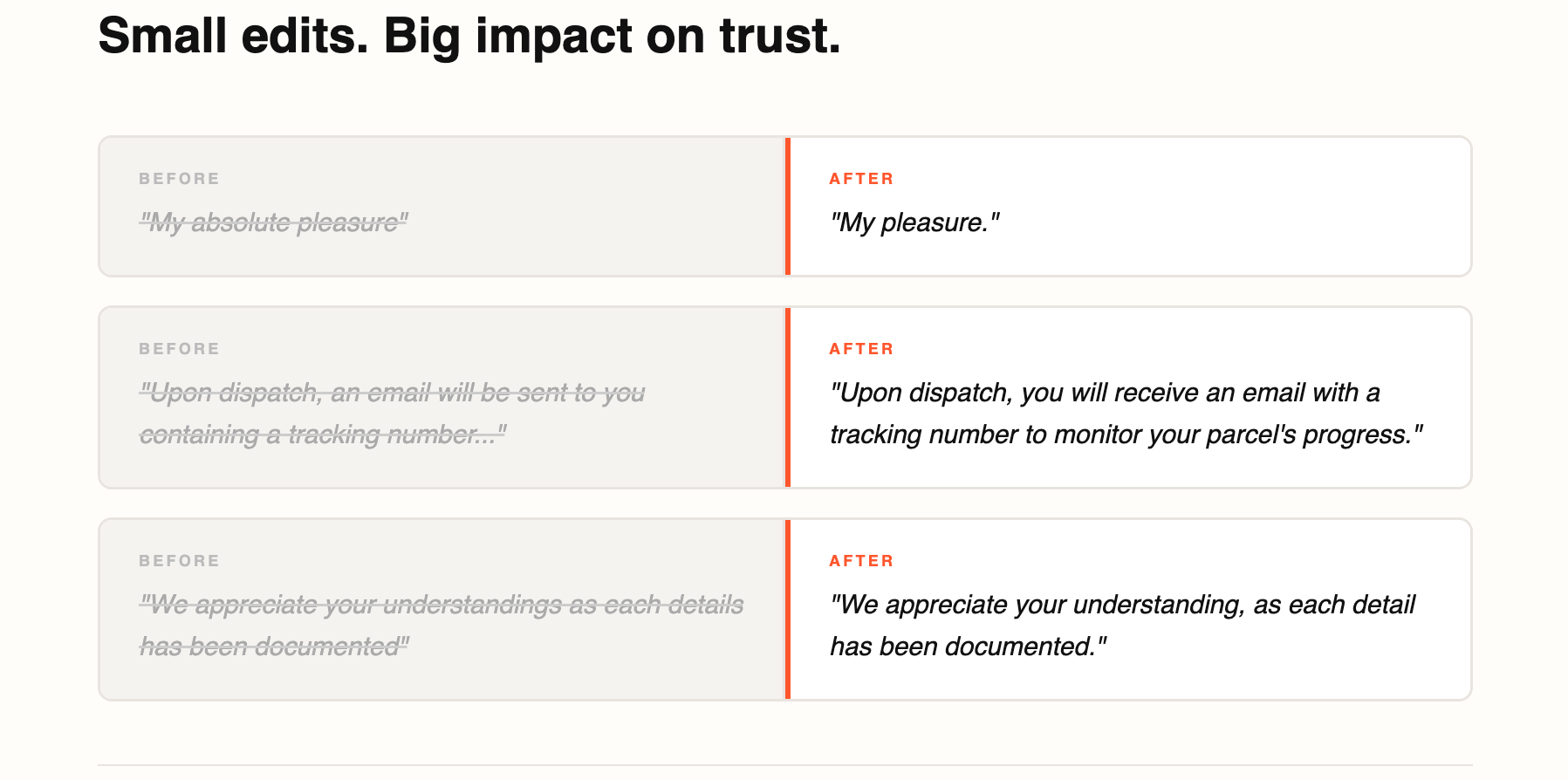
One of the most visible shifts in Vista’s optimized responses was the removal of superlatives and exaggerated phrasing.
These aren’t cosmetic edits. They signal tone control.
In multilingual support, agents often default to extra politeness as a safeguard. Especially when communicating in a non-native language, it feels safer to add formality. The result, however, is language that sounds inflated or unnatural to the customer reading it. In some markets, excessive politeness reads as distance. In others, it reads as scripted.
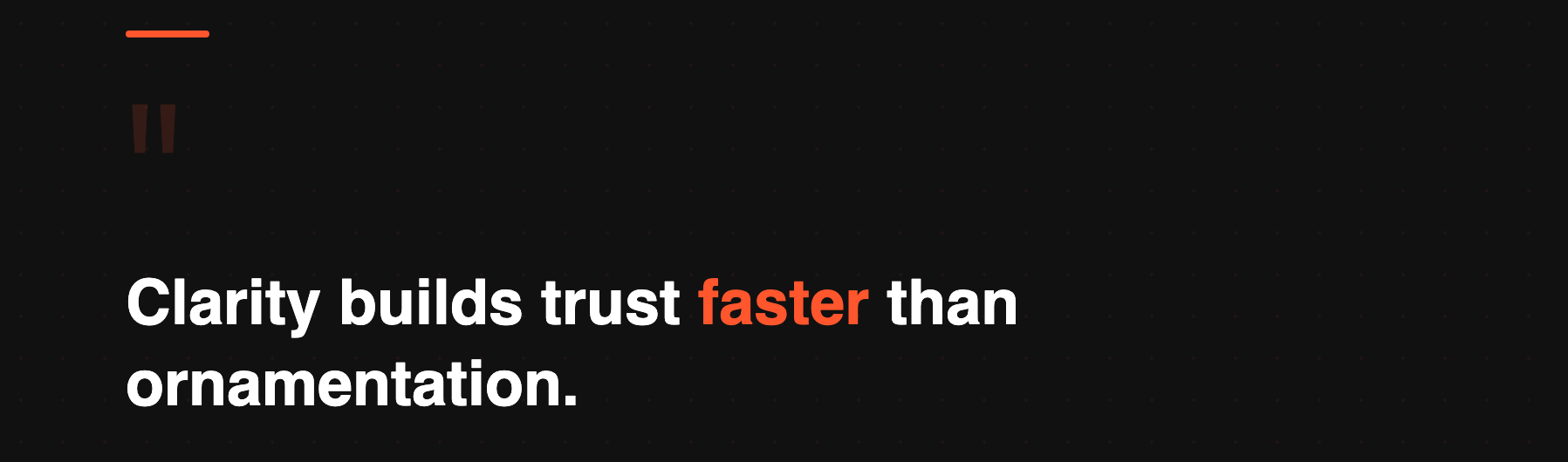
Vista’s feedback highlights a simple principle that clarity builds trust faster than ornamentation. When language is direct and proportionate to the situation, customers spend less time decoding tone and more time absorbing the answer.
That’s not about stripping empathy. It’s about aligning it.
Shorter Sentences, Faster Understanding
Active Voice is Operational Clarity
There’s also a structural shift that often goes unnoticed when moving from passive to active voice.
“Upon dispatch of the new items, an email will be sent to you containing a tracking number…”
became
“Upon dispatch, you will receive an email with a tracking number to monitor your parcel’s progress.”
The difference is subtle but operationally important. Active constructions clarify who does what and when. They reduce ambiguity. In high-volume environments, ambiguity translates into follow-up tickets.
When passive voice dominates, responsibility feels abstract. “An email will be sent” leaves open questions. By whom? Automatically? Manually? When exactly?
Active phrasing anchors the timeline and sets expectations. For a global brand managing thousands of conversations per day, these micro-clarifications add up. Fewer clarifying replies mean lower handle time and higher first-contact resolution.
Vista’s feedback reinforces that tone optimization is not purely aesthetic. It directly affects workflow.
Structure Signals Competence
Polishing Without Sterilizing
What Changes Inside the Organization
The external result of this kind of refinement is a smoother customer experience. The internal result is more interesting.
When responses are optimized for clarity and consistency, new agents ramp faster. Templates require fewer revisions. QA reviews focus less on grammar and more on judgment. Translation output becomes more predictable because the source language is cleaner.
Over time, the organization shifts from reactive editing to proactive design. Instead of correcting messages after they’re sent, teams build systems that generate high-quality language from the start.
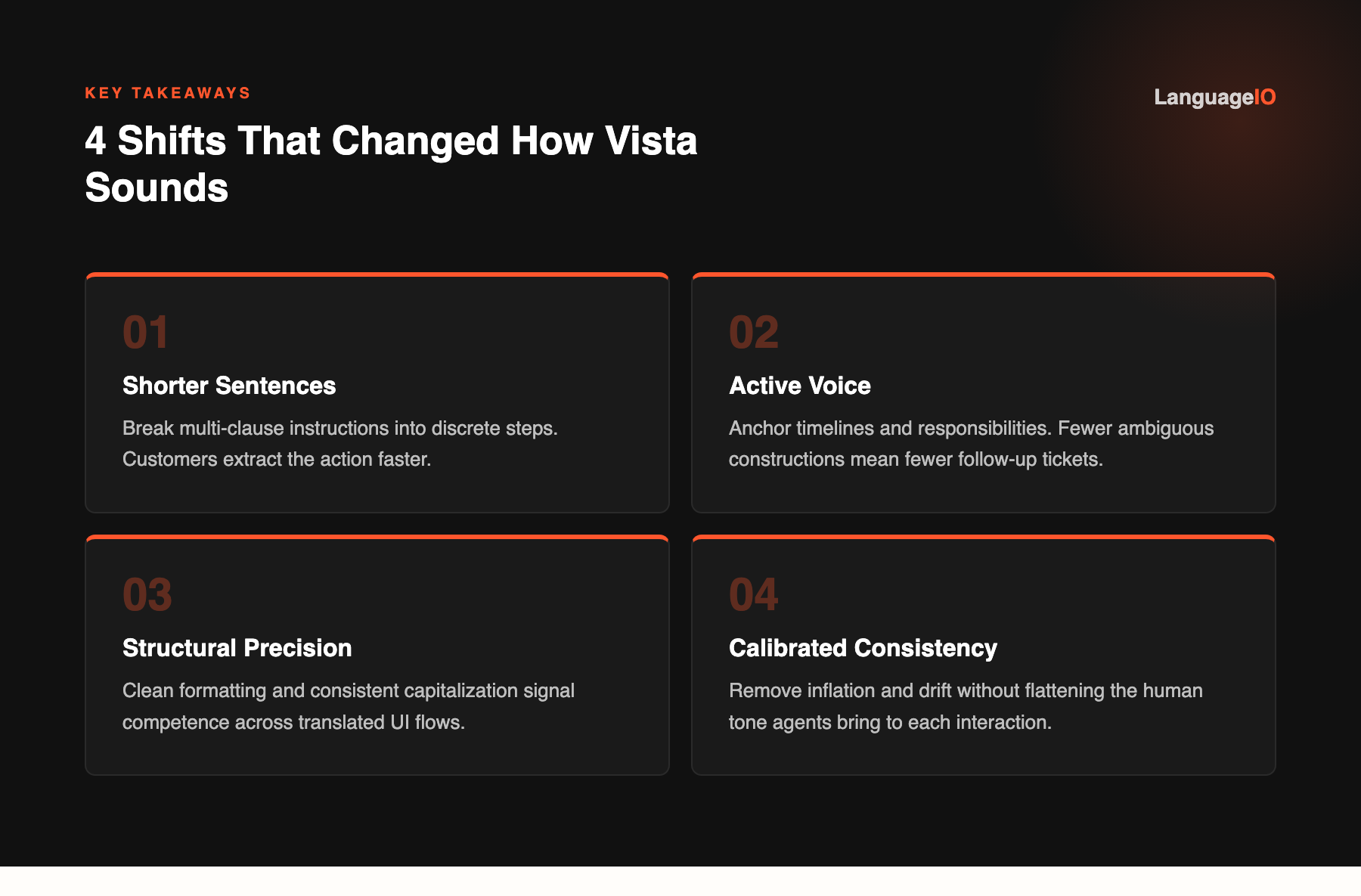
Vista’s feedback points to this transition. The improvements weren’t about rewriting the brand voice from scratch. They were about systematically removing friction by tightening sentences, aligning tone, clarifying structure, activating verbs. Each edit on its own is small. In aggregate, they change how the company sounds at scale.
The improvements weren’t about rewriting the brand voice from scratch. They were about systematically removing friction by tightening sentences, aligning tone, clarifying structure, activating verbs. Each edit on its own is small. In aggregate, they change how the company sounds at scale.
Discover More
-

The Hidden Cost of Support
Agent burnout isn’t a people problem. It’s a P&L problem and it’s hiding in plain-sight across your turnover costs, satisfaction scores, and the calls that close clean but shouldn’t have. This is what it actually costs when the infrastructure protecting your agents hasn’t kept pace with what they are being asked to absorb.
-
Real-Time Language Support Isn’t a Feature. It’s an Operating Model.
For years, enterprises have treated language support as something that happens after the fact. Documents get translated later. Tickets are reviewed and localized in batches. Voice calls are routed to native speakers or external interpreters when available. This model made sense when customer engagement moved slowly and interactions were easy to pause. That world no…