

Real-Time Translation for Salesforce.
Built for Conversations That Can’t Afford to Get It Wrong


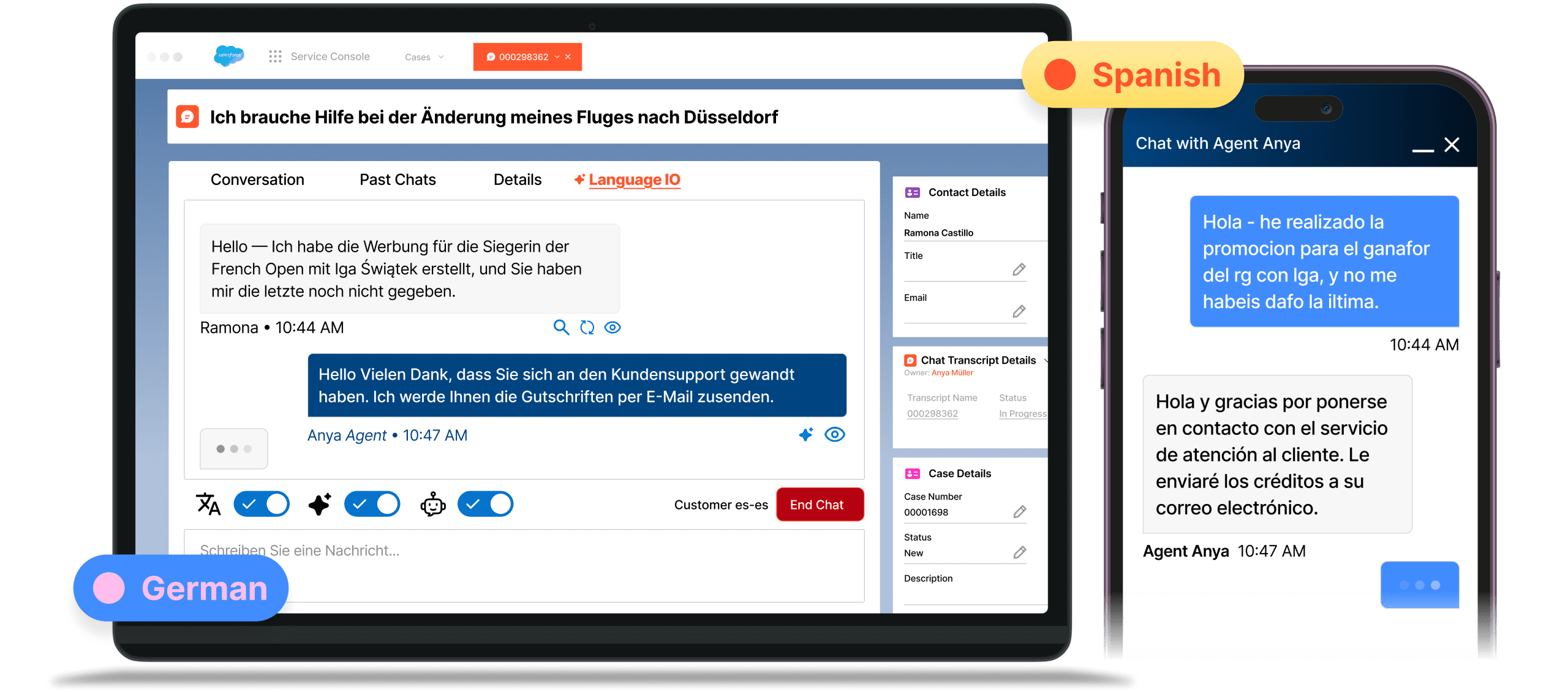
Translating for Global Enterprises






You chose Salesforce because best-of-breed matters. Language IO is the translation layer built to the same standard. Your agents work where they already work, your customers get answers in their language, and nothing about your workflow changes.
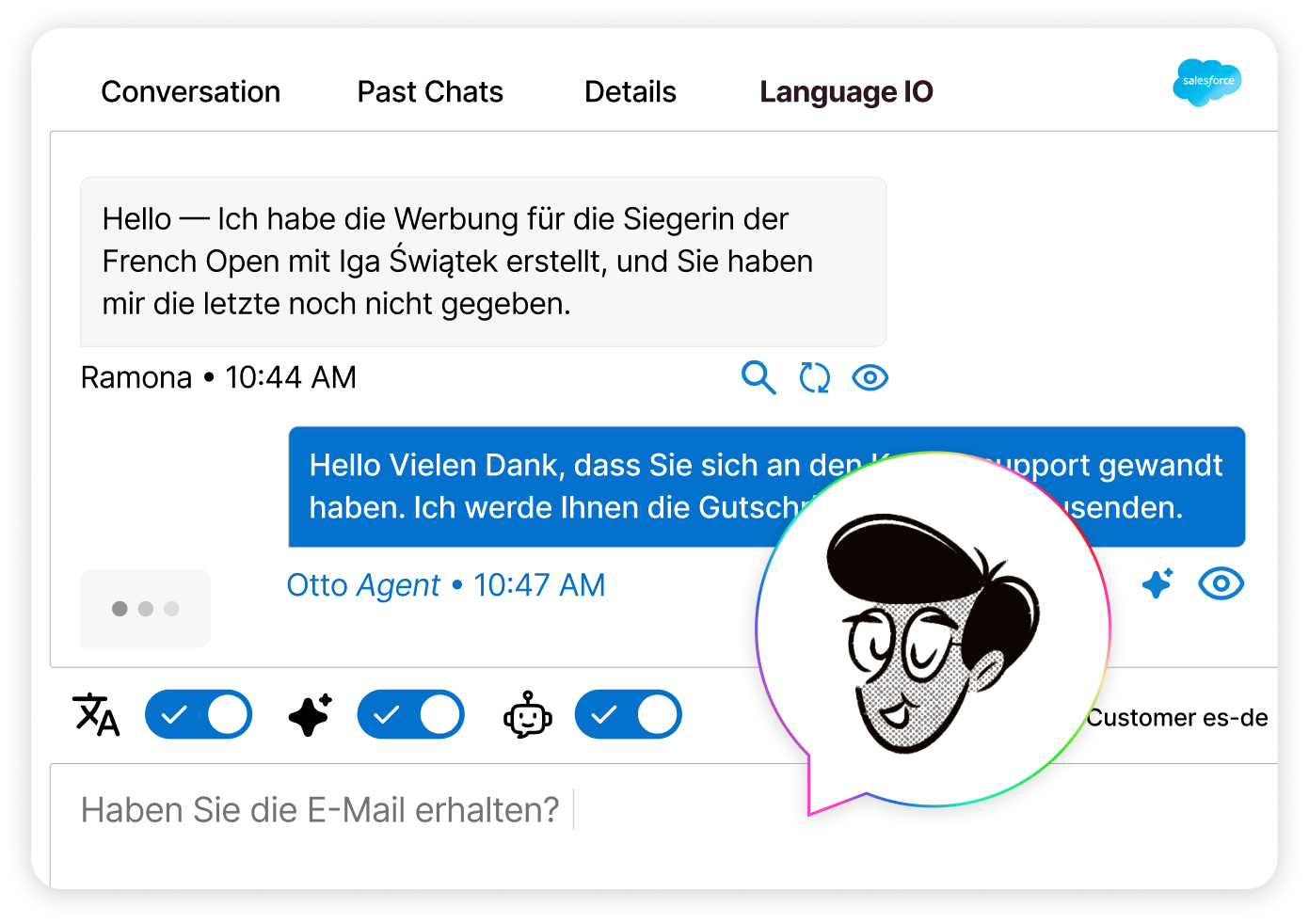
Built for Salesforce, secured for enterprise Native to Salesforce Enhanced Chat. Agents chat with global customers without switching windows or learning new workflows. Fast, accurate and secure translations in any language.

Your team can handle tickets in multiple languages efficiently, ensuring fast, accurate responses and a streamlined workflow across all Salesforce translations.
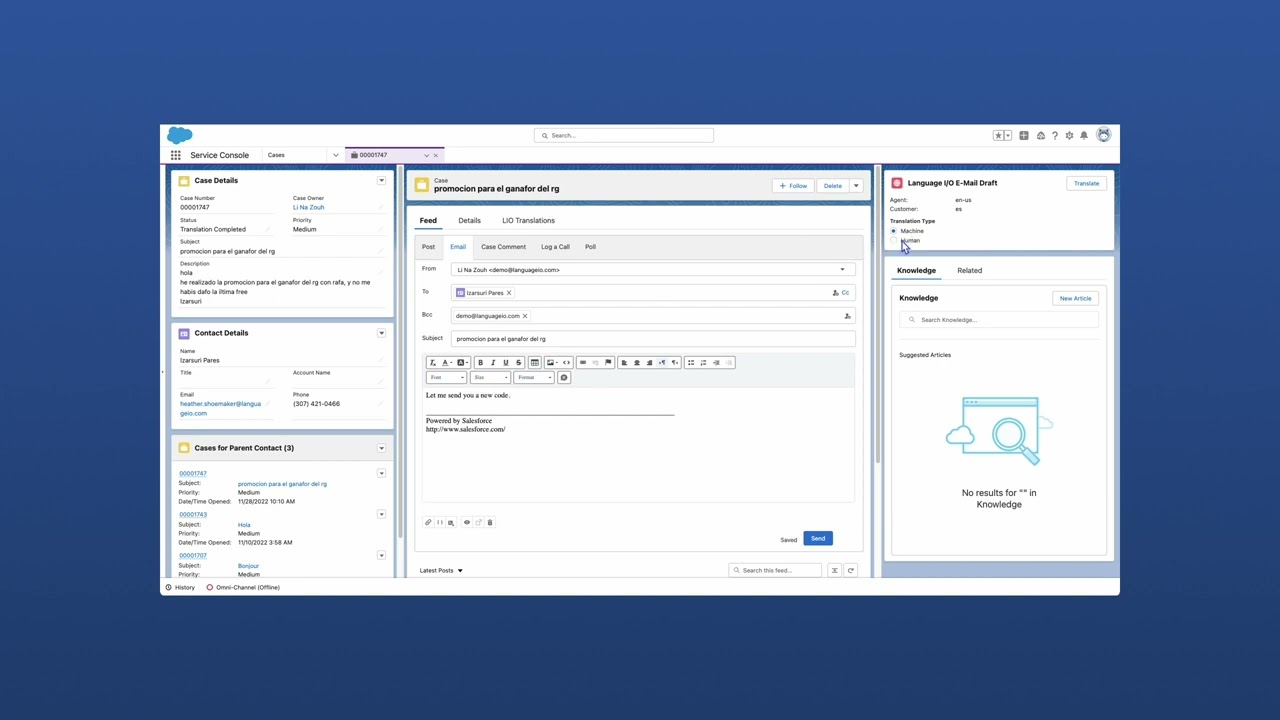
Empower your global customers with the tools they need to find answers independently, all through Salesforce multilingual support.

You Chose a Powerful CRM.
Now Choose the Best Translation.
Salesforce set the standard for enterprise CRM because it was built with one thing in mind: managing customer relationships at scale with the sophistication that large enterprises require. It does that exceptionally well. Translation is a different discipline entirely. It requires deep linguistic expertise, a multi-model approach, real-time quality monitoring, and a team of language specialists who can intervene when something goes wrong. That is not what CRM platforms are designed to do, and it is not where they invest.
The companies that get this right treat translation the same way they treat every other critical infrastructure decision. They find the best solution for the job and integrate it into the platforms they already use. Language IO is the best solution for Salesforce translation.
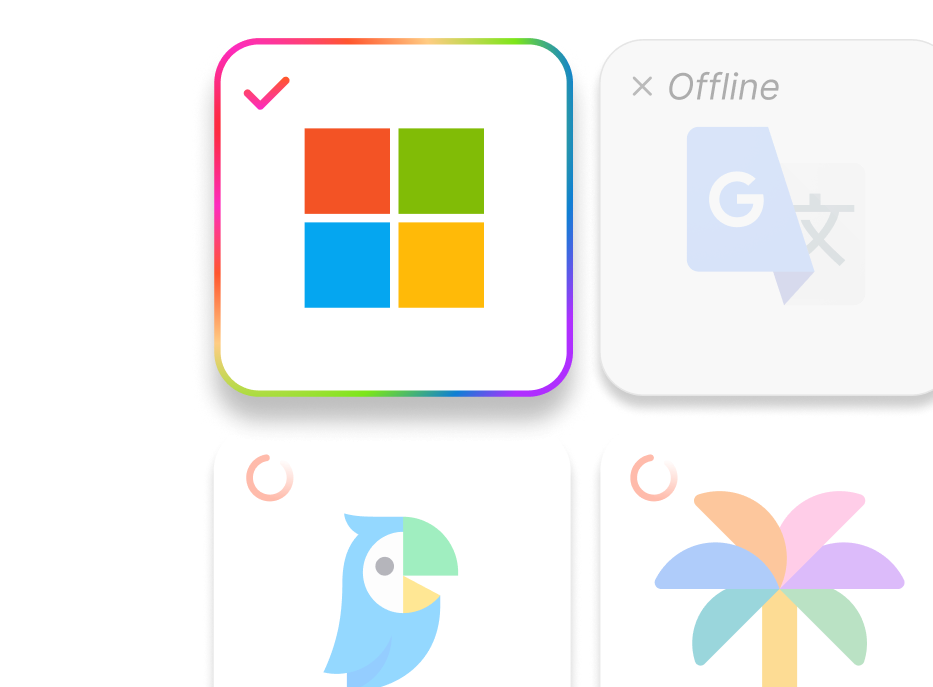
Multi-Model approach based on language pair
Get a demo →
Deep linguistic expertise & team of specialists

Real-time quality monitoring
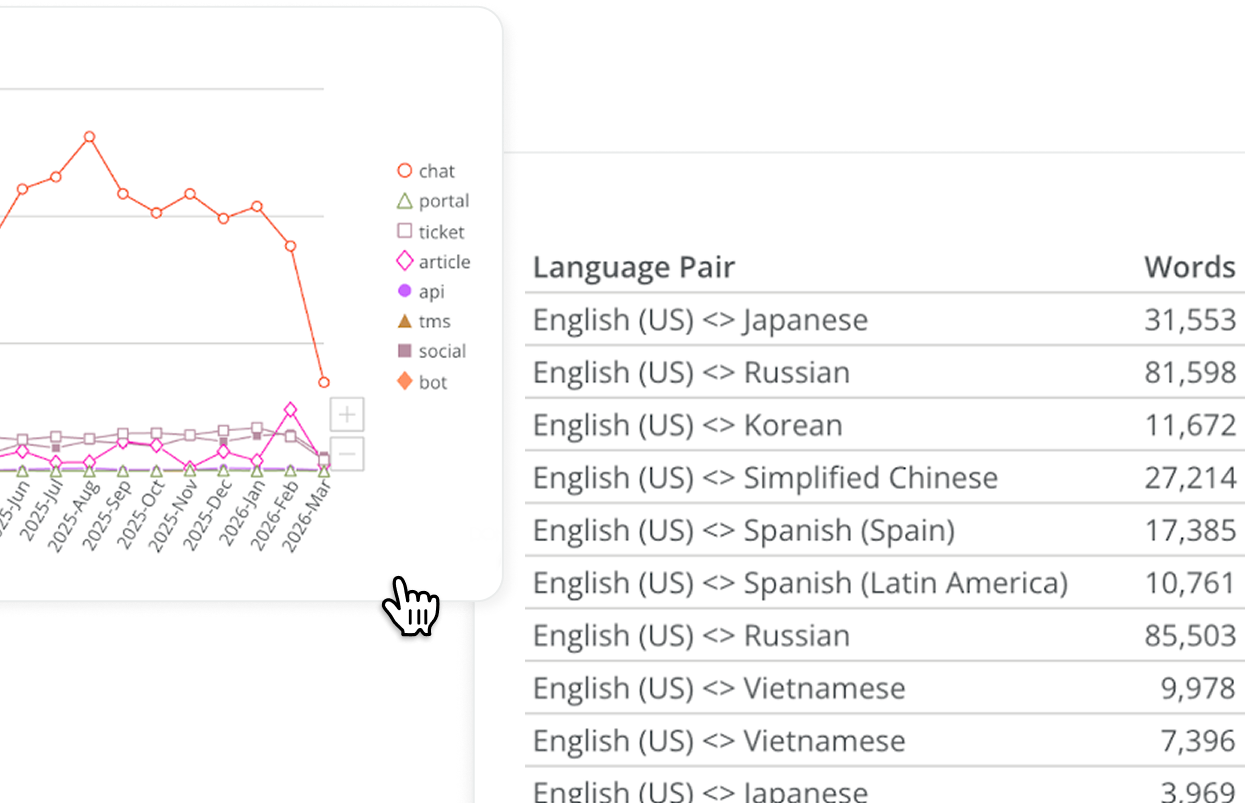
Your Customer Conversations Deserve More Than a Generic Translation Engine.
Not all translations are equal, and not all conversations carry the same weight. A casual inquiry handled imprecisely costs you little. A high-stakes support conversation handled imprecisely costs you a customer, a renewal, or worse.Some languages compound this challenge significantly. Japanese and Korean have grammatical structures that diverge sharply from English. Formality is built into the grammar itself, not layered on top. Idiomatic phrases do not map. Getting these languages right requires more than a capable model. It requires linguistic expertise and the ability to monitor quality in real time.
Language IO brings all three: the right model, linguistic expertise, and a commitment to quality. Our platform includes a team of language specialists who are available when something goes wrong in a language your team does not speak. That is not a capability CRM vendors can offer, and it is the difference between a translation problem caught early and one that compounds across hundreds of conversations before anyone notices.
When the Conversation Has Consequences, Precision Is Not Optional.
For many enterprises, customer support conversations are not just service interactions. They are regulated communications. The words used carry clinical, financial, or legal weight, and errors do not stay contained to a single exchange.
Language IO is purpose-built for industries where this standard is non-negotiable.
Industry
What’s at Stake
Medical Devices and Healthcare

Clinical accuracy, patient safety, regulatory compliance
What Imprecision Looks Like
A standard CRM translation engine rendered “body” as “corpse” in a patient support conversation during a benchmark test. Not an abstraction. A compliance risk and an immediate customer relationship failure.
Financial Services, Banking and Fintech
Regulatory exposure, fiduciary responsibility, brand trust
What Imprecision Looks Like
A mistranslated account instruction, an ambiguous policy explanation, or a transaction detail rendered imprecisely carries legal weight. In financial communication, every term must mean exactly what it is supposed to mean.
Travel and Tourism
Customer safety, operational accuracy, brand reputation
What Imprecision Looks Like
A wrong flight number, an incorrect baggage policy, a visa requirement explained imprecisely does not just frustrate customers. It strands them.
Insurance
Policy accuracy, claims integrity, customer trust
What Imprecision Looks Like
A mistranslated exclusion clause or an imprecise claims instruction has direct financial and legal consequences for the customer, and liability exposure for the carrier.
Pharmaceuticals
Patient safety, adverse event reporting, regulatory compliance
What Imprecision Looks Like
Drug information, dosing instructions, and adverse event communications are subject to strict FDA and EMA requirements. The language used is not discretionary.
Energy and Utilities
Safety, regulatory compliance, service continuity
What Imprecision Looks Like
Service disruption communications and safety instructions must be precise. In regulated energy markets, how you communicate with customers is not just a service standard. It is a legal one.
Manufacturing
Supply chain accuracy, distributor and dealer support, technical documentation
What Imprecision Looks Like
Mistranslated product specifications, assembly instructions, or safety warnings create downstream risk across global supply chains. When a distributor in another country acts on bad information, the consequences travel fast.
Language Regulation Is Changing.
Your CRM Vendor Is Not Tracking It.
An expanding number of markets now have enforceable language requirements that directly affect how businesses support their customers. Quebec’s Bill 96 requires companies serving customers in the province to do so in French, with fines that start at $30,000 for a first offense and scale from there. The law applies regardless of where your company is headquartered. If you have customers in Quebec, you are subject to it. Bill 96 is the most prominent example, but it is not the only one. Language access requirements are tightening across the European Union, and markets like New Zealand carry strong expectations around indigenous language support that are increasingly reflected in how businesses operate there.
What these regulations share is that compliance is not just about having a translation available. It is about the quality, consistency, and auditability of that translation. A CRM vendor is not going to flag a regulatory change in Quebec, a dedicated language translation tool partner will.

Build, Buy, or Best-of-Breed: The Ultimate Guide to AI Tooling: A Decision Framework for Salesforce & AI Teams
Learn how to evaluate AI solutions for your Salesforce ecosystem with a practical framework that covers native tools, custom builds, and best-of-breed platforms- plus real-world insights from Checkr’s implementation journey.
The Best Model for Every Language. Every Time.
Our research shows that multi-model systems produce translations two to six times more fluent than single-model approaches.
That difference shows up in customer conversations, in resolution rates, and in the confidence your agents have in what they are communicating. Language IO’s Smart Model Selection evaluates every translation request and routes it to the best available model for that specific language pair. Not the same model for every language. That matters because translation quality varies significantly across language pairs, and a system optimized for Spanish-English may perform far worse for Japanese-English or Arabic-English.
Smart Model Selection also means you are never exposed to a single point of failure. When a model underperforms or goes down, our platform fails over automatically to a secondary model. Quality monitoring runs in real time, evaluating every translation before it reaches your agent. If the output does not meet the semantic standard, the system retries. Your agents never see a gap. Your customers never notice.
Every Agent.
Every Language.
One Familiar Interface.
Agents you already have can go further than ever before.
Read more
For most global support operations, language has always been a staffing problem. You hire for it, schedule around it, and route tickets based on who speaks what. The result is a support team that is never quite the right size and customers who wait longer because the right agent is not available. Language IO changes that equation. When translation runs natively inside Salesforce, language stops being a constraint on your team and starts being a capability of your entire team. Every agent can support every customer, regardless of where that customer is writing from. Coverage gaps close. Ticket routing simplifies. The agents you already have go further than they could before.
The experience for agents is exactly what it should be: invisible. Translation happens inside the workflow they already use. Nothing changes about how they work. What changes is what they can do.
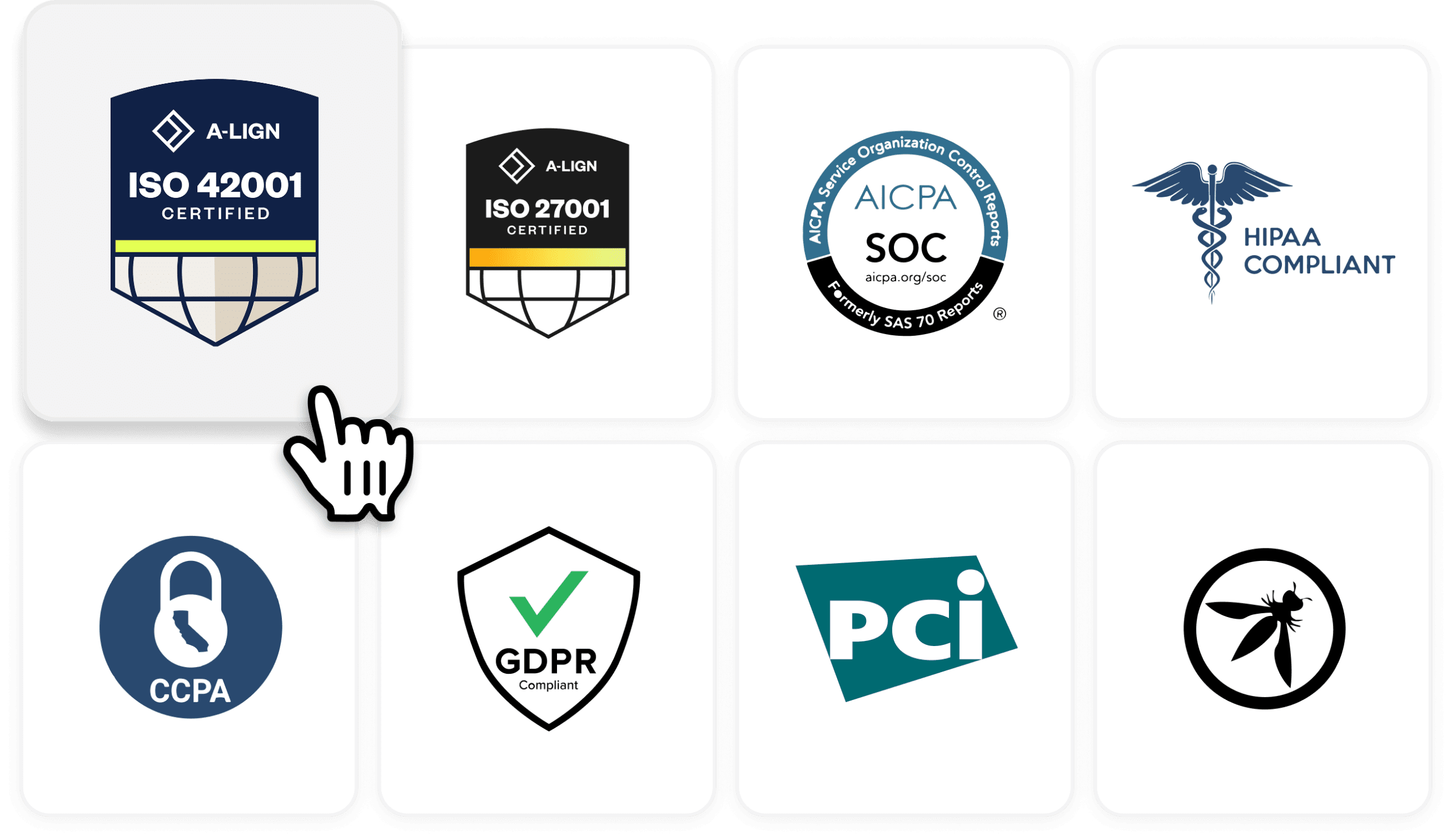
Strongest Security in the Business. No Exceptions.
We are certified for ISO 42001 and 27001, SOC 2 Type II, HIPAA, CCPA, GDPR, PCI, and OWASP. For the full picture, visit our security page.
Read more
For most global support operations, language has always been a staffing problem. You hire for it, schedule around it, and route tickets based on who speaks what. The result is a support team that is never quite the right size and customers who wait longer because the right agent is not available. Language IO changes that equation. When translation runs natively inside Salesforce, language stops being a constraint on your team and starts being a capability of your entire team. Every agent can support every customer, regardless of where that customer is writing from. Coverage gaps close. Ticket routing simplifies. The agents you already have go further than they could before.
The experience for agents is exactly what it should be: invisible. Translation happens inside the workflow they already use. Nothing changes about how they work. What changes is what they can do.
Integrate Seamlessly
Up and Running in Less Than a Day
Our native integration with Salesforce Service Cloud installs in under 24 hours, with no custom development required or disruption to your existing configuration.
Read more
For most global support operations, language has always been a staffing problem. You hire for it, schedule around it, and route tickets based on who speaks what. The result is a support team that is never quite the right size and customers who wait longer because the right agent is not available. Language IO changes that equation. When translation runs natively inside Salesforce, language stops being a constraint on your team and starts being a capability of your entire team. Every agent can support every customer, regardless of where that customer is writing from. Coverage gaps close. Ticket routing simplifies. The agents you already have go further than they could before.
The experience for agents is exactly what it should be: invisible. Translation happens inside the workflow they already use. Nothing changes about how they work. What changes is what they can do.


Empowering agents with effortless multilingual support
right inside Salesforce.

Jason K. G2 Review
What to Look for in an
Enterprise Translation Partner
Not every translation solution is built for the demands of enterprise customer support. The right partner brings deep linguistic expertise, not just technology. They monitor quality in real time and take responsibility when something goes wrong. They understand the regulatory environments your business operates in and help you stay ahead of them. They treat your customer data with the same rigor you would expect from any enterprise infrastructure provider. And they hold themselves to a standard, not just a best-effort one. Learn more →


The Support Platform Truly Built for Two.
The ultimate customer experience isn’t defined by the smartest AI, but by the moment both humans leave feeling understood.



