Using call center agent performance metrics in 2025—tools like call center agent performance scorecards and real-time agent performance monitoring—is a must. Running a call center without tracking performance is like driving blindfolded—it’s only a matter of time before you crash into a wall of angry customers.
If your agents aren’t efficient, engaged, and delivering quality service, your business suffers. It’s estimated that businesses lose approximately $75 billion yearly because of poor customer service.
With AI, automation, and customer expectations evolving, keeping an eye on call center agent metrics is more important than ever. Whether you want to measure response times, improve efficiency, or find out why Bob in customer support keeps putting people on hold for 10 minutes, we’ve got you covered.
Knowing how to evaluate call center agent performance is essential. Let’s break down the must-track metrics that’ll keep your call center running like a well-oiled machine.
What Are Call Center Agent Performance Metrics?
Call center agent performance metrics are the report card for your support team—except instead of getting a letter grade, it’s actionable data. These metrics track everything from speed to service quality, ensuring agents aren’t just answering calls but actually solving customer issues effectively.
Businesses use these numbers to evaluate contact center agent performance, streamline operations, and identify training needs. Whether it’s tracking agent productivity in a call center or improving the call center agent efficiency score, these metrics help companies optimize support teams without playing a never-ending guessing game.
The Importance of Agent Performance Monitoring
You wouldn’t hire a chef without tasting their food—so why would you run a call center without tracking agent performance? Agent performance monitoring is crucial for several key reasons.
It Prevents Customer Churn: Keep Customers Coming Back
A slow response time or unresolved issue is the easiest way to lose a customer. If your agents aren’t efficient and responsive, customers will take their business elsewhere—probably to your biggest competitor.
Imagine a frustrated customer trying to reset their password but being bounced from one agent to another. After waiting on hold for 15 minutes, they finally give up and switch to a competitor offering instant chatbot-assisted solutions. That’s a lost sale and a damaged brand reputation.
It Boosts Efficiency: No More Endless Call Transfers
A well-monitored team operates like a high-performance engine—no wasted time, no unnecessary detours. Agent performance monitoring ensures that calls go to the right person the first time and that agents handle interactions efficiently.
If an agent keeps transferring calls because they lack the right information, customers will quickly get frustrated. By tracking call transfer rates, managers can pinpoint training gaps and ensure agents have access to knowledge bases that help them resolve issues faster.
It Improves Morale: Happy Agents = Better Service
Burned-out, unappreciated agents won’t deliver top-tier service. Tracking agent performance isn’t just about catching mistakes—it’s also about recognizing and rewarding great work.
An agent consistently receives high customer satisfaction scores (CSAT) but isn’t recognized for it. Over time, they lose motivation and start disengaging. Meanwhile, another agent struggling with long Average Handle Times (AHT) isn’t getting the support they need to improve.
It Ensures Consistency: Every Customer, Every Time
Customers expect a seamless experience, whether they’re calling on a Monday morning or chatting with support on a Saturday night. Without performance monitoring, you risk inconsistent service, where some customers get five-star treatment while others get the dreaded “I don’t know, let me transfer you.”
One agent follows all protocols and provides a thorough resolution, while another rushes the call and gives incomplete answers. Without quality assurance (QA) monitoring, the customer experience varies wildly depending on which agent picks up.
10 Top Call Center Agent Metrics to Follow in 2025
2025 is the year to take agent productivity in your call center to the next level. Here are the top call center agent performance metrics to follow this year.
1. First Response Time (FRT) – Because Nobody Likes Waiting
The longer a customer waits for a response, the more irritated they become. First Response Time (FRT) measures how quickly an agent acknowledges and begins assisting a customer. With Language IO, agents can support customers in any language without waiting for a translation, which means more agents can jump in to help a wider range of customers—reducing FRT significantly and responding to more tickets faster. Faster responses lead to higher satisfaction, as customers feel seen and valued the moment they reach out.
2. Agent Utilization Rate – The Workhorse Metric
If your agents are either drowning in work or twiddling their thumbs, you’ve got a problem. The Agent Utilization Rate—also known as occupancy—tracks how much of an agent’s time is spent actively assisting customers versus waiting for the next ticket or getting bogged down with administrative tasks. Language IO helps boost occupancy by enabling agents to handle inquiries in languages they previously couldn’t support. That means fewer idle moments and more productive time, without overwhelming your team—keeping workloads balanced, agents engaged, and customers happy.
3. Average Handle Time (AHT) – Speed vs. Quality
Average Handle Time measures the total time an agent spends on a customer interaction, from answering the call to wrapping up after-call tasks. While shorter handle times suggest efficiency, cutting corners can lead to unresolved issues and repeat contacts. Language IO helps strike the right balance with tools like translation source optimization and translated quick-texts, which speed up communication without sacrificing quality. The result? Agents resolve issues faster and more thoroughly—keeping both metrics and customers happy.
4. Call Abandonment Rate – The Call Center Heartbreaker
If customers are hanging up before speaking to an agent, that’s a major red flag. A high Call Abandonment Rate means your customers are stuck in long queues, dealing with frustrating IVR menus, or simply giving up before getting help. Reducing hold times and optimizing call routing can drastically lower this number and keep customers engaged.
5. Customer Satisfaction Score (CSAT) – The Gold Standard
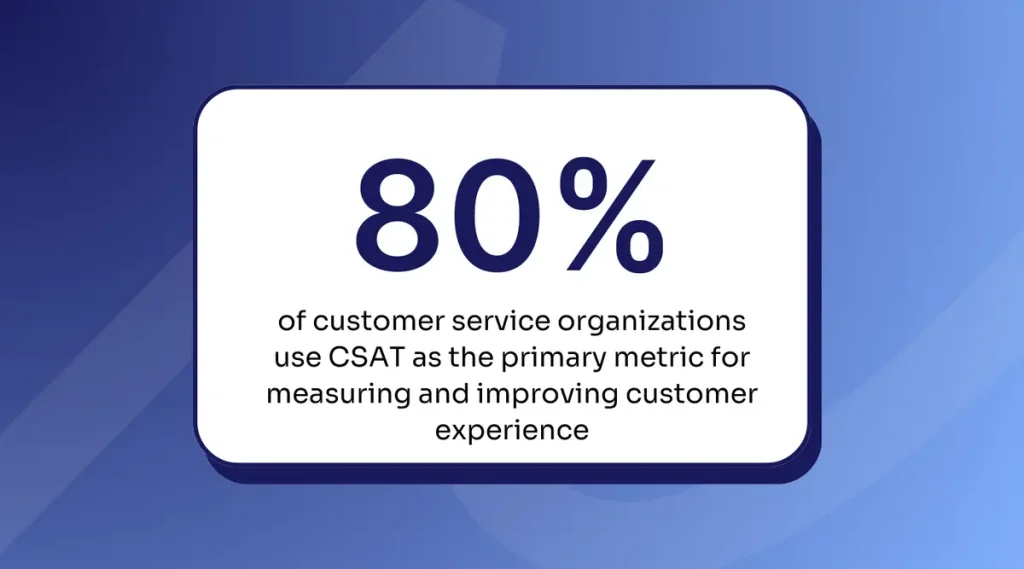
Customer Satisfaction Score (CSAT) is the ultimate measure of how happy customers are with their support experience, with 80% of customer service organizations using it as the primary metric for measuring and improving customer experience. Typically gathered through post-interaction surveys, a strong CSAT score shows that agents are delivering quality support. Language IO helps boost CSAT by providing accurate translations and allowing customers to receive help in their native language—leading to more natural conversations, fewer misunderstandings, and ultimately, happier customers.
6. Agent Effort Score (AES) – How Hard Is Their Job?
The easier it is for an agent to resolve customer issues, the better their performance—and their morale. AES measures how much effort an agent must exert to find answers, navigate systems, and resolve inquiries. Language IO reduces that effort by providing suggested quick-texts and, soon, an AI-powered agent assistant that streamlines knowledge base searches and pulls localized responses instantly. Less time spent digging for answers means faster resolutions, happier agents, and more consistent support across languages.
7. Wrap-Up Time – The Silent Time Killer
After a call ends, agents spend time summarizing the interaction, logging notes, and processing follow-up tasks. If wrap-up time is excessive, it slows down efficiency and increases customer wait times. Automating call notes and post-call processing allows agents to move on to the next customer faster without sacrificing accuracy.
8. Transfer Rate – The Ping-Pong Problem
High transfer rates mean customers are getting bounced from agent to agent instead of having their issues resolved efficiently. Whether caused by poor routing or limited agent expertise, too many transfers lead to frustration and longer resolution times. Language IO helps reduce transfers by equipping agents with real-time translation, enabling even the most technical or experienced agents to support a broader range of customers. With fewer language barriers, the right agent can resolve the issue the first time—no transfer required.
9. Quality Assurance (QA) Scores – The Call Center Report Card
Quality Assurance (QA) scores measure how well agents follow protocols, engage with customers, and provide accurate resolutions. High QA scores indicate strong performance, while low scores highlight areas that need improvement. Regularly reviewing interactions and providing real-time feedback ensures quality stays high across the board.
10. Net Promoter Score (NPS) – The Ultimate Loyalty Test
NPS measures how likely a customer is to recommend your company to others. High NPS scores indicate a strong customer experience, while low scores signal frustration and potential churn. Companies that consistently track NPS can identify service gaps and implement improvements that lead to better brand loyalty and long-term customer relationships.
How Shutterstock Eliminated Manual Processes and Scaled Multilingual Support Across 20+ Languages
Leading stock photography provider streamlined and scaled translation of support articles in 20+ languages.
How to Improve Call Center Agent Performance: 5 Proven Tactics
Call center agents are the frontline of customer service, and their performance directly impacts customer satisfaction, efficiency, and business success. But how do you take agent performance from good to great? Here are five battle-tested tactics that can help.
1. Leverage AI & Automation to Supercharge Efficiency
Your agents are only as good as the tools they have. AI-powered solutions like Language IO help agents handle multilingual customer inquiries in real time, reducing response times and eliminating communication barriers. An artificial intelligence call center can also assist with automating ticket categorization, real-time sentiment analysis, and predictive customer insights, allowing agents to focus on meaningful interactions rather than repetitive tasks.
2. Implement Structured Coaching & Training Programs
No one improves without feedback. Regular coaching sessions, supported by call center agent evaluation data, allow managers to provide targeted training based on real performance insights. Using an individual performance call center agent performance dashboard, supervisors can identify trends, pinpoint weak spots, and develop structured training plans tailored to each agent’s needs.
3. Recognize & Reward High Performance
Nobody wants to feel like just another cog in the machine. Recognizing high-performing agents—whether through financial incentives, public praise, or career advancement opportunities—boosts morale and encourages continuous improvement. Gamification strategies, such as leaderboards and performance-based rewards, create a culture of healthy competition and engagement.
4. Optimize Workflows & Eliminate Unnecessary Bottlenecks
Agents waste valuable time on inefficient workflows, outdated systems, and excessive administrative tasks. As the call center AI market expands, streamlining operations by integrating AI-powered CRM systems, automating post-call documentation, and improving call center agent efficiency ensures that agents spend more time solving customer issues and less time navigating clunky software.
5. Improve Multilingual Support Without Adding Headcount
For global businesses, language barriers slow down response times and impact contact center agent performance. Hiring multilingual agents is costly, but AI-driven translation solutions like Language IO provide a scalable alternative. With real-time, accurate translations for chat, email, and even voice interactions, agents can communicate seamlessly with customers in any language without needing bilingual fluency.
Key Takeaways
Call center agent performance metrics are essential for optimizing efficiency, improving customer satisfaction, and reducing churn. By tracking key metrics like First Response Time, Average Handle Time, and Customer Satisfaction Score, businesses can identify areas for improvement and enhance agent productivity.
Leveraging AI-driven tools like Language IO helps streamline workflows, eliminate language barriers, and reduce inefficiencies. Implementing structured coaching, automation, and performance-based incentives ensures agents deliver top-tier customer service while staying engaged and motivated. This contact center digital transformation guarantees a more efficient, customer-focused operation, benefiting both clients and agents.
FAQs
What is a call center agent performance scorecard?
A call center agent performance scorecard is a structured evaluation tool used to measure an agent’s effectiveness based on key performance indicators (KPIs). It tracks metrics such as First Response Time (FRT), Average Handle Time (AHT), Customer Satisfaction Score (CSAT), and Net Promoter Score (NPS).
By analyzing this data, managers can identify areas for improvement, provide targeted coaching, and ensure consistency in service quality. Performance scorecards help agents stay aligned with business goals and continuously improve their efficiency and customer interactions.
What software tracks call center agent performance metrics?
Several software solutions are designed to track and analyze call center agent performance. Popular tools include CRM-integrated dashboards (like Salesforce and Zendesk), workforce management software (like NICE and Verint), AI-powered analytics platforms, and real-time agent monitoring tools.
Language IO enhances this ecosystem by providing translation quality metrics and tracking translation volumes by channel—giving teams visibility into how multilingual support is being leveraged across platforms. While not a full multilingual performance analysis tool, Language IO offers key insights that help evaluate translation efficiency and coverage alongside broader performance metrics.
What are the KPIs for call center agents?
Key Performance Indicators (KPIs) for call center agents vary based on business goals, but the most essential ones include:
- First Response Time (FRT): Measures how quickly an agent responds to customer inquiries.
- Average Handle Time (AHT): Tracks the total duration of an agent’s interaction, including talk time and post-call work.
- Customer Satisfaction Score (CSAT): Evaluates customer feedback after an interaction.
- Net Promoter Score (NPS): Measures customer loyalty based on their likelihood to recommend the company.
- Call Abandonment Rate: Tracks the percentage of customers who hang up before speaking to an agent.
- Quality Assurance (QA) Score: Assesses how well an agent follows protocols and resolves issues.
- Agent Utilization Rate: Measures the percentage of an agent’s time spent handling calls versus idle time.
Tracking these KPIs ensures continuous improvement, better agent engagement, and a superior customer experience.