Choosing a chatbot platform is an important decision for any business looking to improve customer interaction and automate support services.
The right platform can handle repetitive tasks and also engage users effectively, enhancing the overall customer experience.
Selecting the perfect chatbot platform involves evaluating factors like integration capabilities, ease of use, and cost to ensure it aligns with your business needs.
In this article, readers will find out how to choose a chatbot, including a detailed guide and key features to consider.
TL;DR
- Determine specific goals and objectives for using a chatbot. This helps in selecting a platform with suitable features and capabilities.
- Depending on your business’s complexity and needs, choose between rule-based, intent-based, or AI chatbots.
- Prioritize a platform offering capabilities like seamless website integration, user-friendly interfaces, and extensive customization options.
- Evaluate platforms based on pricing models, factoring in the complexity, required features, and scale of deployment.
Why Choosing the Right Chatbot Platform Is Critical for Customer Service
Selecting the appropriate chatbot platform is pivotal for enhancing customer service experiences. A well-chosen platform ensures that customer interactions are streamlined, efficient, and personalized.
Businesses should consider several key factors when deciding which chatbot platform is the best one for their needs.
Purpose is crucial; the chatbot must align with specific company objectives, such as improving customer support or automating routine queries.
Furthermore, the target audience should also be a primary consideration, as the chatbot must cater to the preferences and communication styles of different user segments.
An effective chatbot platform can significantly reduce response times, thereby increasing customer satisfaction.
Features like natural language processing (NLP) allow chatbots to understand and respond accurately when it comes to translation quality to varied queries, which is essential for maintaining a high level of service.
When evaluating platforms, consider solutions that offer advanced RAG (Retrieval-Augmented Generation) capabilities. AI chatbot platforms that combine conversational AI with knowledge management enable businesses to connect their existing databases and documents for more accurate, context-aware responses—reducing hallucinations and improving customer satisfaction.
Integration with existing systems is another vital consideration.
A chatbot platform that can easily integrate with existing tools and workflows ensures smooth operations and minimizes disruptions.
This capability also means that the chatbot can provide relevant information from other business systems in real time.
Customization options are also important for tailoring the chatbot to specific needs.
Businesses might need to adapt conversational scripts or modify user interfaces to enhance the user experience further.
The security features cannot be overlooked as well. A reliable platform should ensure that conversations and data are protected, maintaining customer trust and complying with data protection regulations.
The 8 Most Important Factors to Consider When Choosing a Chatbot Platform for Your Business
1. Security and Compliance
Security and compliance are critical, especially for businesses in sectors like finance and healthcare. To protect sensitive data, a platform must adhere to industry-specific regulations.
For instance, ensuring GDPR compliance in Europe is vital to avoid legal issues.
2. Language Support
A chatbot platform should support multiple languages to cater to diverse audiences.
Businesses that operate globally need a chatbot capable of communicating effectively in various languages.
This inclusivity not only enhances user experience but also broadens market reach.
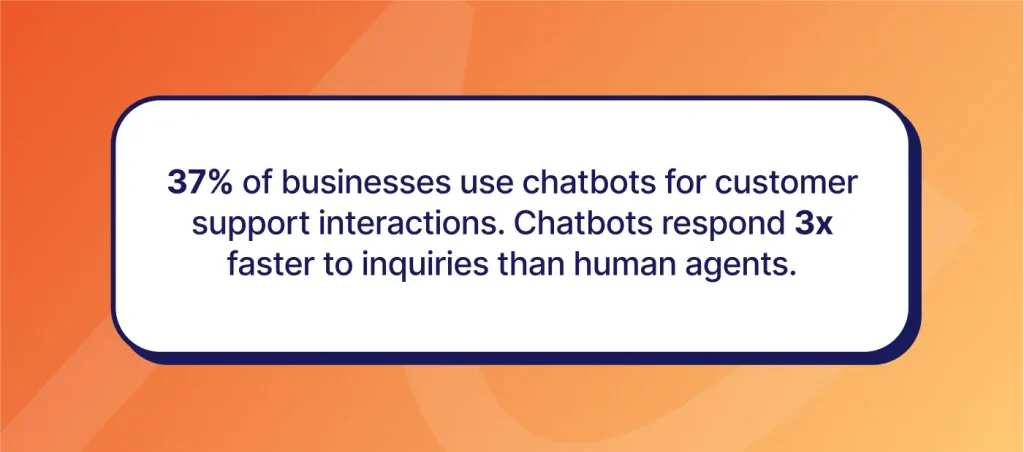
37% of businesses use chatbots for customer support interactions.
Chatbots respond 3x faster to inquiries than human agents (Intercom).
3. Integration Capabilities
Seamless integration with existing systems like CRM and social media tools is essential.
A chatbot that can integrate smoothly with platforms such as Salesforce or Facebook enhances operational efficiency and customer interaction continuity.
4. User-Friendliness
Ease of use is important for quick setup and management.
Platforms with intuitive interfaces, like drag-and-drop builders, allow businesses to develop and update chatbots without needing technical expertise. This saves both time and resources.
5. Customization Flexibility
Customization options enable businesses to tailor chatbots to specific needs.
A platform that allows for customized interaction flows, branding elements, and response patterns helps align the chatbot with company goals and customer expectations.
6. Scalability
The platform should scale with the growth of the business.
Scalability ensures the chatbot can handle increased demand and user interactions. This factor is crucial for businesses expecting rapid expansion or fluctuating user volumes.
7. Cost and Pricing Models
Understanding different pricing tiers and potential hidden costs is vital.
Some platforms may offer usage-based pricing or enterprise licensing, which can impact budgeting. Transparent pricing helps in making informed financial decisions.
8. Performance and Reliability
A reliable and high-performing chatbot platform minimizes downtime and technical glitches.
Consistent updates and support services indicate a dependable platform. Businesses need to be sure they have smooth operations to maintain customer satisfaction.
How to Choose a Chatbot Platform That Works Best for Your Business: A 6-Step Guide
Step 1: Identify Business Objectives
Before selecting a chatbot platform, it’s crucial to identify the specific goals of the business.
First, determine if the chatbot is intended for customer support such as translation, sales, or lead generation.
For instance, a retail business might focus on improving customer service, while an e-commerce site might prioritize guiding users through the buying process. Having clear objectives will help with better platform selection.
Step 2: Evaluate Platform Features
Look for platforms that offer essential features like Natural Language Processing (NLP), integration capabilities, and customization options.
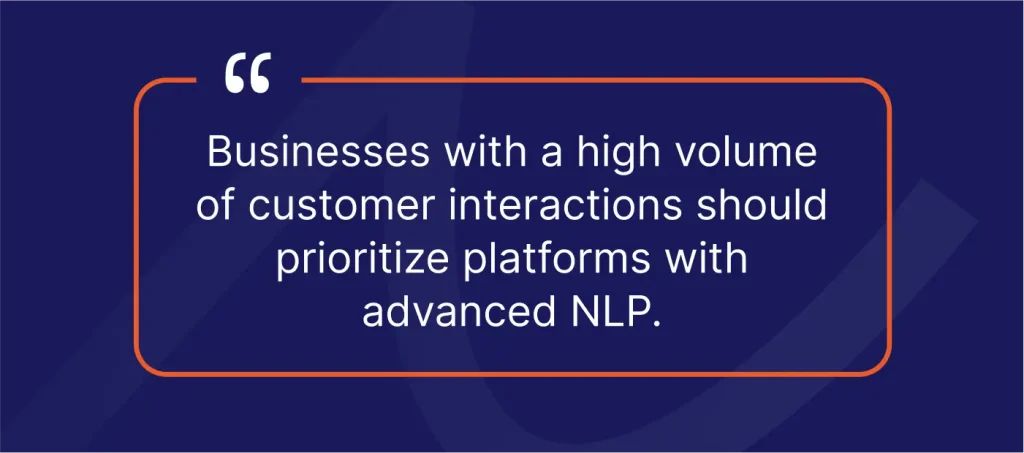
Businesses with a high volume of customer interactions should prioritize platforms with advanced NLP.
Companies seeking seamless operations may also need integration with existing CRM or ecommerce systems, ensuring that the chatbot complements their workflows.
Step 3: Assess Integration Capabilities
Integration with existing systems like CRM or ERP is vital for efficiency.
Select a chatbot that can connect easily with these systems.
For example, a company using Salesforce might need a platform capable of direct integration, enabling the chatbot to pull and push data effortlessly. The ideal platform should also support popular applications and tools.
Step 4: Consider User Experience
The chatbot interface should be intuitive for both users and administrators.
Opt for platforms with straightforward user experiences, reducing the learning curve for staff and customers.
A business with limited IT resources might prioritize platforms known for their user-friendly dashboards and customer interaction tools, ensuring ease of use.
Step 5: Review Analytical Capabilities
Robust analytics help inform decision-making by tracking metrics like user engagement and satisfaction.
An excellent platform provides comprehensive analytics to evaluate performance and refine interactions.
For example, a platform offering detailed reports on chatbot conversations can help a company identify common customer inquiries and optimize scripts accordingly.
Step 6: Factor in Cost and Scalability
It’s important to balance the cost with its features and potential for growth.
Businesses should consider both the upfront and ongoing costs, ensuring the platform can scale as the company grows.
A startup might begin with a cost-effective solution that scales, while an established enterprise could invest in platforms offering extensive features and scalability options from the start.
Final Thoughts on Choosing a Chatbot Platform
Selecting the right chatbot platform is crucial for enhancing customer engagement and boosting business efficiency.
Businesses need to consider aspects like security, scalability, and the alignment of features with the goals of the organization.
Ease of use is vital, especially for teams lacking technical expertise.
A platform with a user-friendly interface saves time and reduces operational friction.
Different industries have unique requirements.
Platforms designed with specific sectors in mind can better handle industry-specific challenges, providing tailored functionality.
Businesses must weigh the cost against the potential benefits.
An effective platform will deliver a good return on investment, supporting long-term business objectives. Use detailed comparisons to assist the decision-making process.
With numerous platforms available, prioritizing customizability and reliable support can make a significant difference.
This choice can profoundly influence customer satisfaction and operational success.
A Discussion About Generative AI, LLMs and the Future of Translation
To bolster translation accuracy in a business landscape that demands multilingual competency, LLM training or domain adaptation is essential. This recording guides you to maintain a first-rate customer experience through effective and efficient communication.
FAQs
Rule-Based Chatbots vs. AI Chatbots: What Is the Difference?
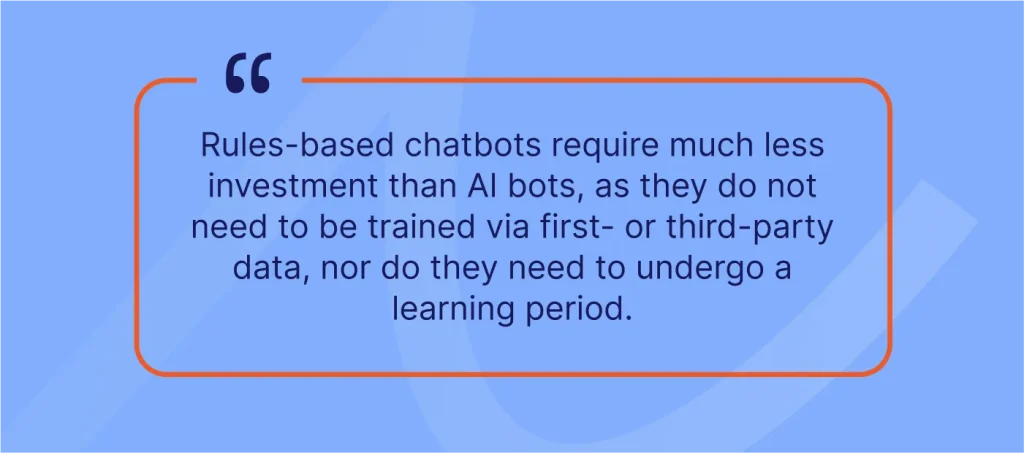
Rule-based chatbots operate on predefined pathways and are ideal for straightforward tasks. They follow specific rules set out by developers, which makes them predictable and consistent.
Common uses include answering FAQs and guiding users through processes with fixed questions and answers.
AI chatbots leverage artificial intelligence to offer a more dynamic interaction.
They can learn from interactions, understand context, and are better at managing complex queries.
These chatbots are suitable for businesses needing flexible customer engagement and can improve efficiency but often require more resources to set up and maintain.
If you’re leveraging chatbots for translation, it’s worth diving deeper into traditional translation vs real time translation.
What Are the KPIs of Chatbot Platforms?
Key Performance Indicators (KPIs) for chatbot platforms include response accuracy, user engagement, and integration effectiveness.
Response accuracy measures how correctly a chatbot responds to user queries, which directly impacts user satisfaction.
User engagement metrics, such as the number of interactions and user retention, help assess the chatbot’s usability and appeal.
Integration effectiveness evaluates how well the chatbot connects with existing systems like CRM and payment processors, ensuring seamless operations. Monitoring these KPIs allows businesses to optimize their chatbot’s performance continuously.
What Are the Latest Trends in Chatbot Platforms?
Several trends are shaping chatbot platforms today.
One significant trend is the integration of chatbots with omni-channel services. This enables consistent customer interactions across various platforms like web, social media, and messaging apps.
There is also an increased focus on natural language processing (NLP). This enables chatbots to understand and respond to human language more naturally.
Lastly, the use of voice-activated chatbots is on the rise. This reflects the growing consumer preference for voice commands.
Staying abreast of these trends helps businesses develop more competitive and versatile chatbot solutions.