Learn why cultural sensitivity, inclusivity and accuracy are essential elements of translation in the fintech industry.
___
In an increasingly interconnected world, the fintech industry rests at the intersection of innovation and cultural diversity—where language and translation are pivotal in shaping user experiences.
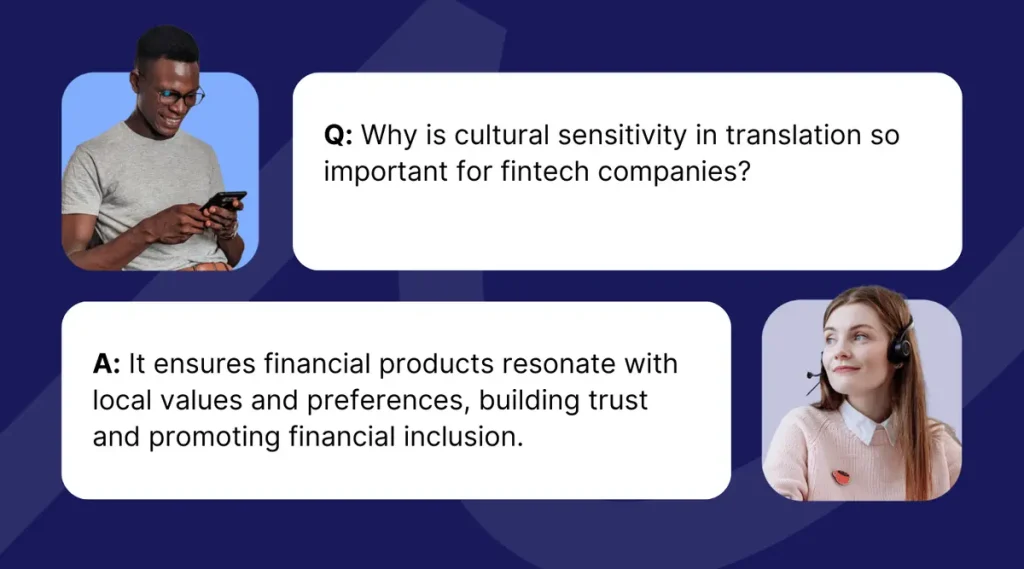
Effective translation goes beyond word-for-word conversion. It’s a nuanced art that captures the essence of local customs, values and behaviors that shape the way financial services are perceived and utilized. As fintech platforms aspire to be more accessible and inclusive, culturally sensitive translations become essential for making products resonate with users on a personal level and breaking down barriers to financial inclusion.
How Translations Reflect Local Culture and Norms
Financial services are deeply intertwined with local customs, societal norms and values, all of which influence how customers view money, invest and engage with financial institutions. Simply translating words on a webpage or in an app without understanding these cultural subtleties can create confusion, mistrust or even unintended offense.
In some countries, customers have a strong preference for cash transactions, even in an era of digital payments. In places like Japan or parts of Eastern Europe, the use of credit is less prevalent. For fintech companies trying to penetrate these markets, the language they use and the products they offer should reflect these preferences.
Offering features like direct bank transfers, local cash payment options or simplified payment methods can be much more appealing than just promoting digital wallets or credit-based transactions. Achieving this requires understanding local financial habits and reflecting them in the platform’s design and the language used to describe financial products.
Each culture has its own unique perspective on money, savings, risk and investment. For example:
- Cash vs. Digital Payments: Cash remains king in many parts of the world, especially in regions with less access to banking infrastructure or where customers have a strong cultural attachment to physical currency. In contrast, other markets, particularly in North America or parts of Europe, have embraced credit and digital payments. For example, a fintech app designed for a market that prefers cash-based transactions may need to emphasize features like local bill payment options or integration with cash transfer systems.
- Risk Tolerance: In some cultures, customers may have a higher tolerance for risk and be more inclined to explore innovative financial products like cryptocurrencies or peer-to-peer lending. In regions where financial crises or economic instability have been common, customers may prefer low-risk, traditional savings methods such as cash deposits or gold. A fintech platform must recognize these preferences and adjust its messaging accordingly or risk such results as poor adoption or dissatisfaction.
- Gender Norms: Women may face greater barriers to financial participation due to traditional gender roles in some cultures. In these markets, fintech companies may need to adapt their messaging and features to be more inclusive by offering products and services that empower women to take control of their finances. For example, firms may create features that promote financial education or offer products specifically designed for women’s financial needs—all while making sure the language used is culturally sensitive and empowering.
Scaling Global Support For Travel and Tourism with AI
Everything from booking tickets to arranging hotel stays has changed. Every part of your trip — your itinerary, flight information, hotel check-in — are now accessible on your mobile device. And with all these developments, traveler expectations have changed as well.
How Accurate Translations Impact Financial Inclusion Globally
Financial inclusion refers to all individuals and businesses having equal access to affordable, responsible and sustainable financial services that meet their needs. According to the World Bank, financial inclusion fosters economic growth and employment, promotes financial empowerment of women and contributes to the elimination of poverty. It also helps build resilience for individuals and businesses vulnerable to climate change and natural disasters by enabling them to invest in sustainable practices.
For fintech companies, the ability to speak to customers in their native language can be invaluable in breaking down barriers to financial inclusion. It also creates an immediate sense of trust and familiarity. Financial services involve sensitive transactions, personal data and long-term commitments. For users uncomfortable with the platform’s default language, this can create hesitation or fear of making mistakes. By offering translations that reflect not just language, but also cultural nuances, fintech platforms can reassure customers that they are in safe hands.
By translating customer support, product descriptions and user interfaces into various languages, fintech companies can significantly expand their reach and build trust with diverse populations around the world.
- Customer Support: Customer service channels, including live chat, call centers and email, should be available in multiple languages. Offering multilingual support ensures customers can quickly resolve issues, ask questions and receive guidance in their preferred language, which builds loyalty and trust.
- Product Descriptions: Product descriptions are critical. With precise, contextually accurate translations of loan terms, interest rates and repayment schedules, customers have the help they need to make informed financial decisions and reduce misunderstandings.
- User Interfaces: Translating key user interface elements of a website or app, such as buttons, notifications and tooltips, enables customers to navigate the platform with ease.
How to Ensure Accuracy Without Losing Meaning
Terminology can often be a major barrier for customers who are unfamiliar with complex financial concepts. Financial jargon, or the industry-specific terms that financial services rely on, can be difficult for non-experts to understand.
Fintech companies use these terms widely across platforms, apps and financial services. However, translating them into other languages can be challenging, especially when equivalent concepts don’t exist or convey different things in different cultures. A single translation error could lead to significant misunderstandings or legal risks, such as when dealing with financial transactions or compliance documents.
Here are examples of common financial terms that can pose serious risks when mistranslated:
- Mortgage
- Potential Issue: In some languages, the term for mortgage may emphasize the legal aspect of the agreement rather than the financial transaction.
- Example: In French, “hypothèque” refers to a mortgage, but directly translates to “pledge,” which might not fully convey the financial arrangement.
- Loan
- Potential Issue: The purpose of a loan may influence its understanding. In some cultures, loans are primarily for business or emergencies, not personal consumption.
- Example: In Hindi, “karz” (debt/loan) might carry a more burdensome connotation than the neutral English “loan.”
To ensure translation accuracy, fintech companies should leverage a professional, AI-powered solution like Language IO. We enable secure, real-time, automated translations without sacrificing quality or accuracy. We offer a deep understanding of finance and more than 150 languages needed to communicate with customers wherever they are in the world.
Other best practices include:
- Select a company with specialized knowledge in your sector to ensure common terms are accurately reflected in both language and essential documents such as tax, W-9 and 1099 forms
- Create a comprehensive glossary of important financial terms to maintain consistency and clarity throughout all translated materials
- Engage subject matter experts (SMEs) to review and validate technical and regulatory content during the translation process
Summary
In the fintech industry, culturally sensitive translations play a critical role in promoting financial inclusion by adapting products and services to the unique customs of global customers. By addressing the complexities of financial jargon, these translations also help to build trust and understanding among customers. As financial services reach more corners of the world, the demand for precise, culturally attuned translations will only increase.
Fintech companies should view translation as a necessary component of their strategy for growth and success. Investing in high-quality translation enhances global reach and contributes to more inclusive financial systems that empower users from all backgrounds to engage confidently with financial services.