Why “Just Use an LLM” Breaks Down in Customer Support
Every enterprise exploring AI for customer support eventually arrives at the same fork in the road. One path leads toward building something internally with a model like Gemini or ChatGPT. The other relies on whatever translation capability is already bundled inside the CRM or CCaaS platform. Engineering teams assume the problem is mostly API calls and prompts. Platform buyers assume the built-in feature will be “good enough.”
By Language IO
Table of Contents
The Early Confidence of DIY AI
Where Internal Builds Start to Fray
One of the first problems that appears is prompt drift. In a small prototype, prompts live inside a codebase and rarely change. In a production support system, prompts evolve constantly. New products introduce new terminology. Customer complaints reveal tone issues in certain languages. Different communication channels require different levels of formality.
Over time, prompts begin to multiply. Variants appear for different languages, different regions, and different use cases. Teams lose track of which version is actually live in production. Version control becomes messy, especially when prompts are embedded directly inside applications rather than managed centrally.
The second issue is terminology. Enterprise organizations rarely communicate in plain, universal language. Product names, internal abbreviations, legal disclaimers, and industry-specific vocabulary appear in nearly every support conversation. Without structured glossary enforcement, language models treat these terms like any other phrase, often translating them literally or inconsistently.
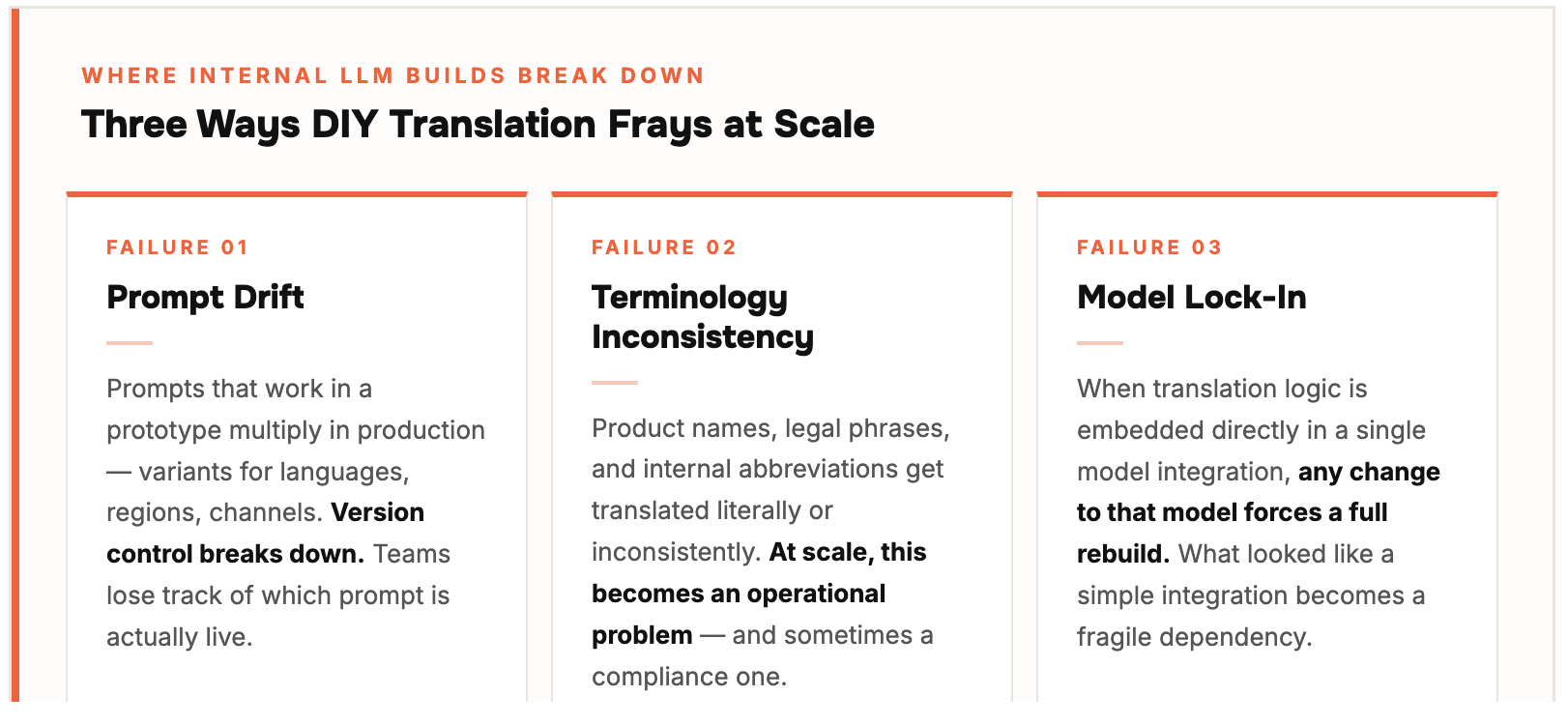
At low volumes, these inconsistencies are irritating but manageable. At scale, they become operational problems. A product name translated incorrectly in one conversation might confuse a customer, while a mistranslated regulatory phrase could introduce legal risk.
The deeper challenge is that most internal builds rely on a single language model. The moment that model changes behavior, suffers an outage, or is replaced by a newer system, the organization faces a difficult migration. Prompts must be retuned. Testing must restart. Customer-facing workflows may need to pause while engineers adapt the system to a new model. What looked like a simple integration begins to resemble a fragile dependency.
The Scale Problem That Demos Hide
A prototype might translate a few dozen conversations per day without issue. A mature support organization processes thousands of tickets across dozens of languages. That shift exposes operational issues that prototypes rarely encounter.
One example is translation quality monitoring. When a model produces a poor translation in a live support conversation, someone must detect it, correct it, and prevent similar errors from repeating. Without built-in feedback loops, those mistakes remain invisible until customers complain or agents manually escalate them.
Another issue is governance. Enterprises operating in regulated environments must often demonstrate how customer communications were generated and reviewed. Audit logs, role-based access controls, and compliance safeguards become essential components of the system. Raw language models provide none of these capabilities on their own.
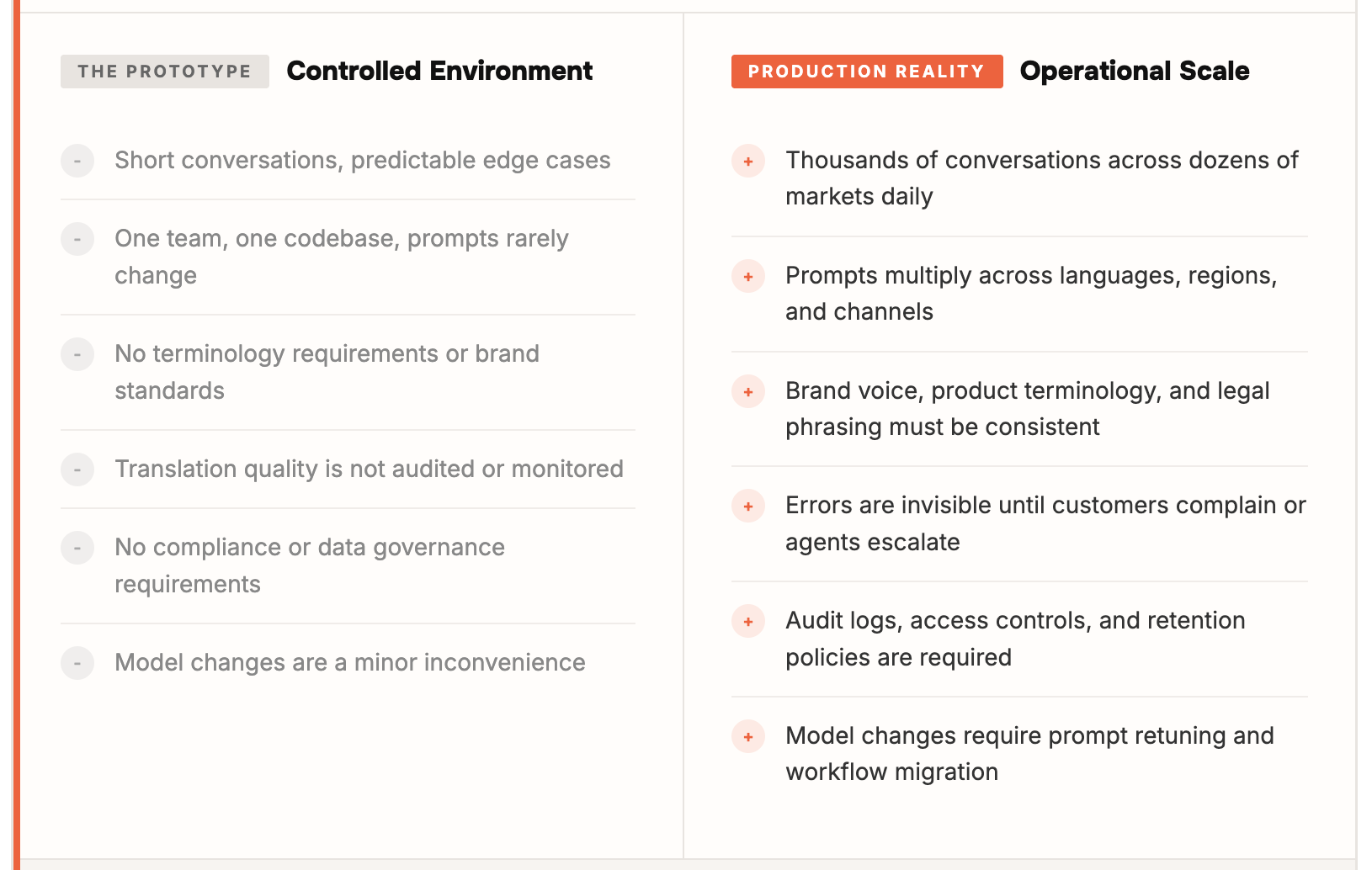
These layers — governance, monitoring, terminology control, and workflow integration — are rarely included in early AI builds because they don’t affect the demo. They only become necessary when the system becomes operational. At that point, teams often realize they are no longer building a translation feature. They are building an infrastructure platform.
The Illusion of Native Translation
The Missing Layer Most Teams Discover Too Late
Where the Real Value Shows UP
The most visible impact of better multilingual infrastructure often appears in support efficiency. Generic translation frequently forces agents to spend extra time clarifying customer messages or correcting misunderstandings. When translation accuracy improves and terminology remains consistent, conversations move faster. Agents spend less time interpreting messages and more time resolving issues.
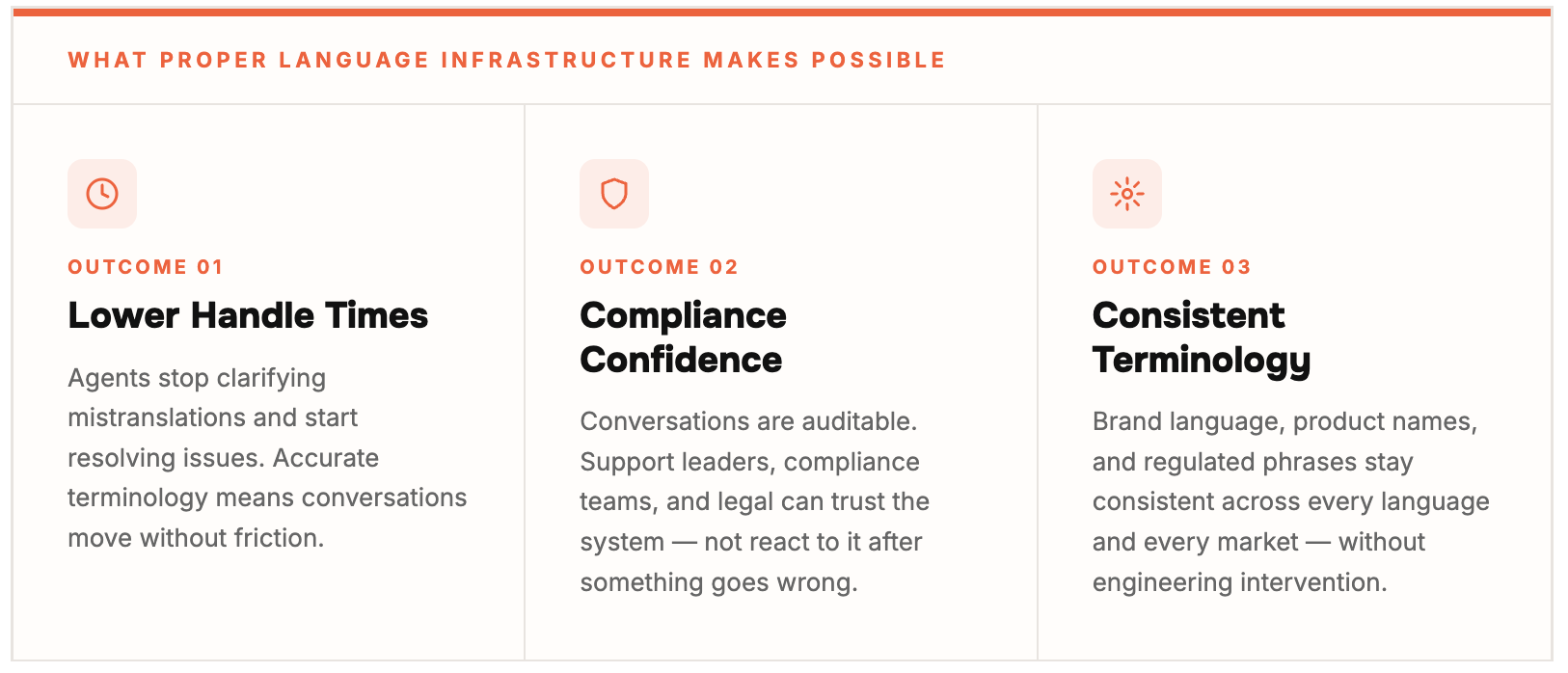
But the deeper benefit is confidence. Support leaders know their teams can communicate accurately with customers regardless of language. Compliance teams know conversations can be audited if necessary. Product teams know their terminology will appear correctly in every market. Those outcomes rarely appear in early AI pilots. They emerge only when language technology is embedded properly inside operational workflows.
The Quiet Difference Between Tools and Segments
It is easy to underestimate how much infrastructure sits behind something as simple as translating a message. A modern language model can generate a fluent sentence in milliseconds. Turning that capability into a reliable component of enterprise customer support requires much more.
Prompts must be controlled. Terminology must be enforced. Quality must be monitored. Conversations must remain auditable. And the system must survive inevitable changes in the underlying models.
Most teams discover this gradually, usually after their first attempt at building or deploying translation tools. What begins as an experiment becomes a realization that language is not just a feature of customer support. It is one of its operating systems.
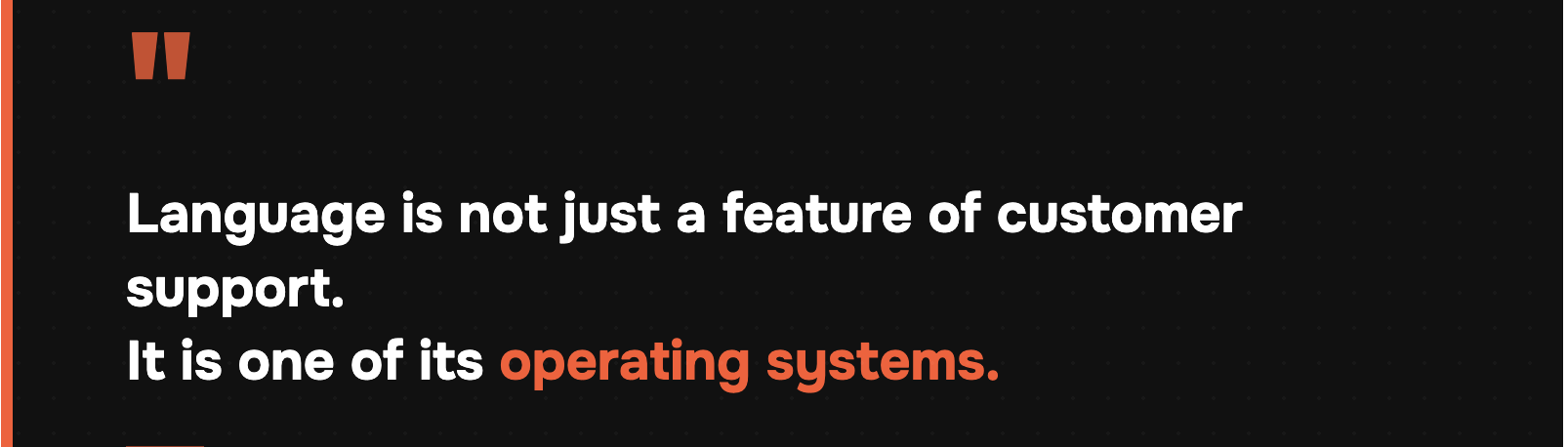
And like any operating system, the difference between a demo and a production environment is where the real engineering begins.
Discover More
-

The Magic Bullet is Dead. Long Live the Specialist.
For two years, the pitch fit on a slide. One model. Ask it anything. Watch it do everything. The general-purpose AI would write your code, run your meetings, answer your customers, and refactor the org chart then summarize it in a podcast.
-
AI Translation for Financial Services and Technology
Language IO provides financial services and technology companies with AI translation that can handle industry terminology, move fast enough for customer support, and protect the sensitive information inside every conversation. Organizations using AI translation need to understand what personal data is processed, why it is processed, where it goes, how long it is kept, which…