AI is transforming the call center landscape faster than you can say, “Please hold.” With AI-powered chatbots, real-time translation tools, and voice augmentation, customer service is more automated than ever. But will AI replace call center agents? Are human agents going extinct?
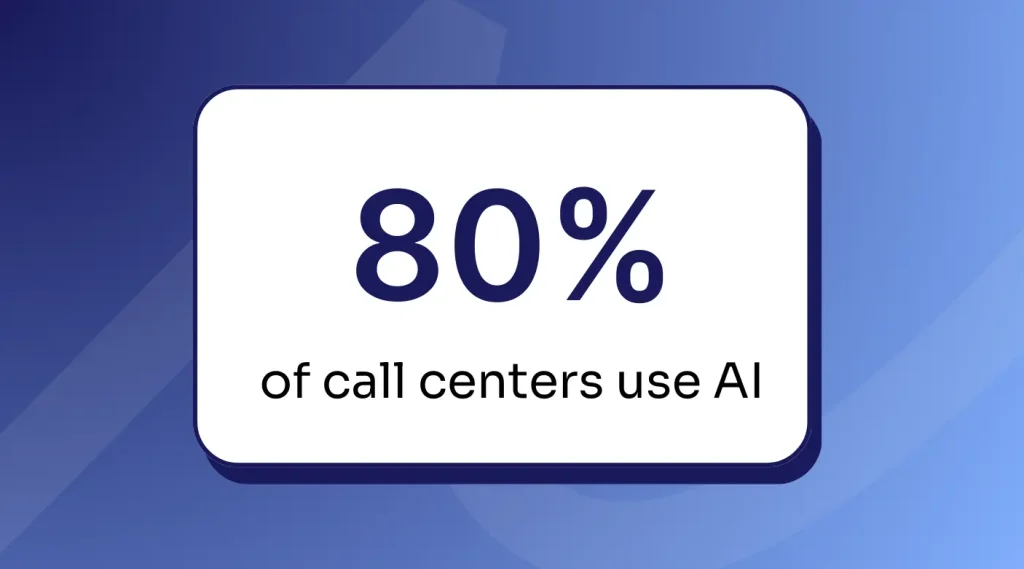
While AI can handle repetitive tasks and speed up response times, it still lacks the empathy, problem-solving skills, and nuanced communication that customers expect. Although 80% of call centers use AI-based technologies to enhance customer interactions, AI isn’t replacing human agents entirely. Instead, it’s evolving into a powerful tool that enhances agent performance rather than eliminating it, with the two working in tandem.
In this article, we’ll explore how AI is reshaping the call center industry, the factors preventing full automation, and whether human agents still have a future in customer support.
The Evolving Role of Call Center Agents
Gone are the days when call center agents were just scripted responders handling routine inquiries. Today’s agents are problem-solvers, brand ambassadors, and sometimes even therapists—offering not just solutions but genuine human connection.
AI is changing their role by automating simple tasks and allowing agents to focus on high-value interactions, and by 2026, AI-based automation is expected to handle 10% of call interactions. Instead of answering “What’s my order status?” for the hundredth time, agents now step in when empathy, critical thinking, and decision-making are required.
AI-assisted tools provide agents with real-time insights, sentiment analysis, and automated customer history retrieval, helping them personalize responses and resolve issues faster. This means agents spend less time scrambling for information and more time providing a seamless, human-centered experience.
For example, a telecom company may use AI to handle basic troubleshooting requests like resetting a router or checking network status. But when a frustrated customer calls in about repeated service failures, a trained agent steps in—understanding tone, defusing frustration, and offering a tailored resolution that AI simply can’t provide.
5 Applications of AI in Call Centers That May Limit the Necessity for Human Agents
The power of AI is being harnessed in different ways in call center settings, reducing the need for human agents. Let’s take a look at some of the AI applications that are changing the landscape of the call center sector.
1. AI-Powered Chatbots: The First Line of Defense
AI chatbots have revolutionized customer support by handling basic inquiries, troubleshooting common problems, and guiding customers through simple workflows. These bots operate 24/7, reducing the need for human intervention in frequently asked questions and transactional requests like password resets or refund status checks.
For example, an e-commerce business that uses a chatbot to handle order tracking inquiries allows agents to focus on resolving escalated issues like payment disputes or lost shipments.
2. Real-Time Translation: Breaking Language Barriers
One of the biggest hurdles in global customer service is language. AI-driven translation tools, like Language IO, enable real-time, seamless communication between agents and customers in multiple languages. This eliminates the need for bilingual agents and ensures consistent service worldwide.
Another possible solution to the issue of language barriers and to facilitate smooth communication with clients across different countries is multilingual call center outsourcing. These call centers offer multilingual support to customers of businesses operating globally.
Imagine that there’s a customer in Japan who contacts a U.S.-based SaaS company for tech support. Instead of waiting for a Japanese-speaking agent, AI translates the conversation in real time, allowing the English-speaking agent to resolve the issue seamlessly.
3. Voice-Augmenting Technology: AI-Assisted Speech Enhancement
AI voice augmentation improves call clarity, reduces background noise, and even adjusts tone to match customer sentiment. Some systems provide live coaching, offering agents real-time suggestions for phrasing responses, de-escalating conflicts, and personalizing interactions.
Take, for example, a travel agency that uses AI voice augmentation to help agents maintain a calm and reassuring tone when handling flight cancellations. This use of AI ensures a smoother customer experience during stressful situations.
4. Sentiment Analysis & Predictive Assistance
AI can analyze tone, word choice, and speech patterns to gauge a customer’s emotions and predict their needs before they even express them. This helps agents anticipate issues and provide proactive support, reducing frustration and enhancing the overall customer experience.
Let’s look at a bank with an AI system that detects a pattern of urgent language and frustration in a customer’s email inquiry about an unauthorized transaction. The system flags the case as high priority and routes it to a senior agent for immediate attention.
5. Automated Call Summarization & CRM Integration
Instead of manually documenting every call, AI-powered transcription tools automatically generate call summaries and update customer records in CRM systems. This reduces administrative tasks for agents, boosting efficiency and freeing them up for more complex, human-centric interactions.
An example of this at work is an insurance company with an AI assistant that summarizes claim-related calls, pulling key information like policy number, claim details, and next steps. This function means a significant reduction in the time agents spend on post-call paperwork.
The language of innovation
Why and how to gain your customers’ trust with your AI and digital transformation strategy
4 Factors Against AI Replacing Call Centers
Although the evolution of tech has seen a significant increase in the use of AI within call centers, 64% of customers would prefer that AI wasn’t used by companies for customer service. It’s essential to recognize the importance of human interaction in customer service settings and the elements that AI can’t replace.
1. Human Connection & Emotional Intelligence
AI can simulate empathy, but it doesn’t truly understand human emotions. When a frustrated customer calls in, they don’t want a robotic response—they want someone who listens, empathizes, and reassures them. Empathy, emotional intelligence, and personalized care remain human-exclusive traits that AI struggles to replicate.
2. Handling Complex & Sensitive Issues
While AI is great for routine requests, it falls short in nuanced, high-stakes situations. Financial disputes, healthcare concerns, and emotionally charged complaints require critical thinking, ethical considerations, and sometimes even rule-bending—things AI isn’t built to handle effectively.
3. Customer Trust & Brand Perception
Many customers still prefer human interaction, especially when dealing with high-value purchases, personal data, or emotionally significant issues. Trust in AI is growing, but businesses risk alienating customers if automation replaces human service entirely. A hybrid model—AI for efficiency and humans for emotional engagement—remains the ideal balance.
4. AI’s Limitations & Errors
AI isn’t perfect. Misinterpretations, biases in training data, and technical failures can lead to frustrating customer experiences. AI-powered chatbots sometimes misread intent, while automated responses may fail to address unique, situational concerns. Human oversight is crucial to maintaining service quality.
Will AI Replace Call Center Agents?
Short answer? No. AI will continue to augment, not replace, human agents. The future of call centers isn’t an AI takeover—it’s an AI-human partnership. In an artificial intelligence call center, AI will handle repetitive tasks, speed up workflows, and provide real-time insights, but human agents will remain the heart of customer service, delivering emotional intelligence, complex problem-solving, and a personalized touch.
Key Takeaways
AI is revolutionizing call centers but is unlikely to fully replace human agents. AI is here to enhance, not replace, the human touch in customer service. Companies that leverage AI while keeping humans at the center of support will create the best customer experiences moving forward. The call center AI market is here to stay, but not at the expense of genuine human interaction.