
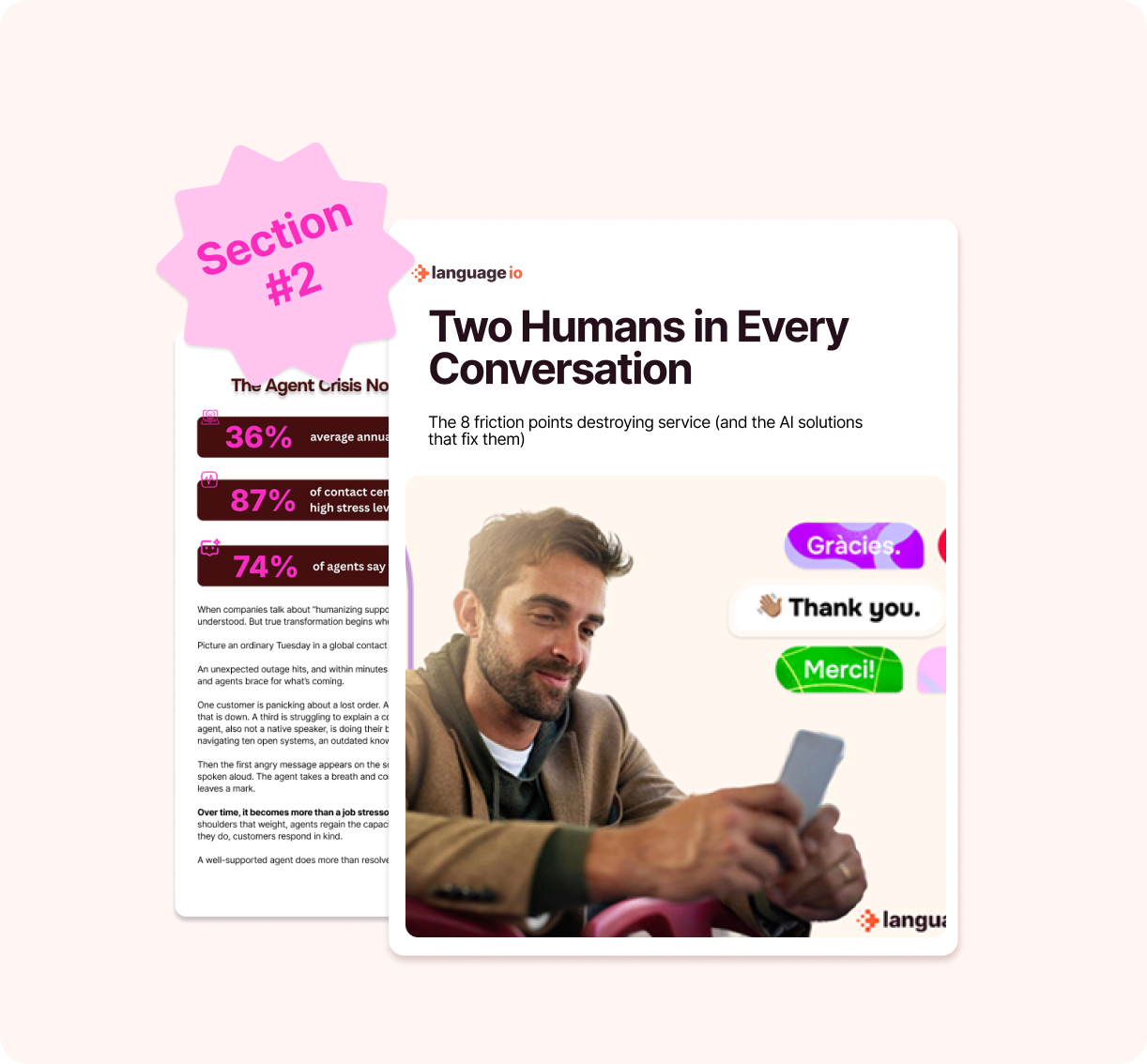
Two Humans in Every Conversation.
Section 2
A free guide from Language IO
The 8 friction points destroying service (and the AI solutions that fix them).
Every support interaction has two people in it. Most companies only care about one.
Here’s What Nobody Talks About
You measure customer satisfaction. You track resolution times. You analyze feedback scores. But you’re missing something critical.
The agent’s experience shapes the customer’s outcome. When an agent is stressed, overwhelmed, or emotionally drained, it shows up in every conversation. When they’re supported, calm, and equipped with the right tools, customers feel it immediately.
This is the two-way nature of empathy in customer service. And it’s backed by science. Psychologists call it emotional contagion: the automatic transfer of feelings from one person to another. A frustrated customer raises an agent’s heart rate and stress levels. The agent, now tense, responds with less warmth. The customer picks up on this coldness and becomes more hostile. The cycle continues.
But the reverse is also true. A calm, empathetic agent can de-escalate an angry customer. Understanding responses lower blood pressure. Clear communication reduces anxiety. The emotional state of your agents directly determines the emotional outcome for your customers.
What’s Inside This Guide
The Two-Way Equation
How human experience lives on both sides of the screen—and why the best organizations design systems that protect and empower both people.
The 8 Friction Points
Every breakdown in customer service hits both sides of the conversation. Discover where the damage happens:
- Access & Wait Times – Long queues stress customers; volume surges crush agents
- Tone & Empathy – Cold responses dismiss customers; abusive messages erode agents
- Control & Transparency – Powerless customers; agents with limited authority
- Complex Resolution Paths – Customers transferred repeatedly; agents lose context
- Information Gaps – Customers repeat themselves; agents search ten systems
- Language & Clarity – Confusing jargon; non-native speakers struggling with tone
- Emotional Energy – Customers feeling ignored; agents facing constant hostility
Post-Interaction Fatigue – Customers reopening tickets; agents drowning in admin work
AI Solutions That Actually Work
Specific, tactical AI capabilities that target each friction point—from toxicity filtering and sentiment detection to unified copilot search and contextual translation.
Discover the other sections.
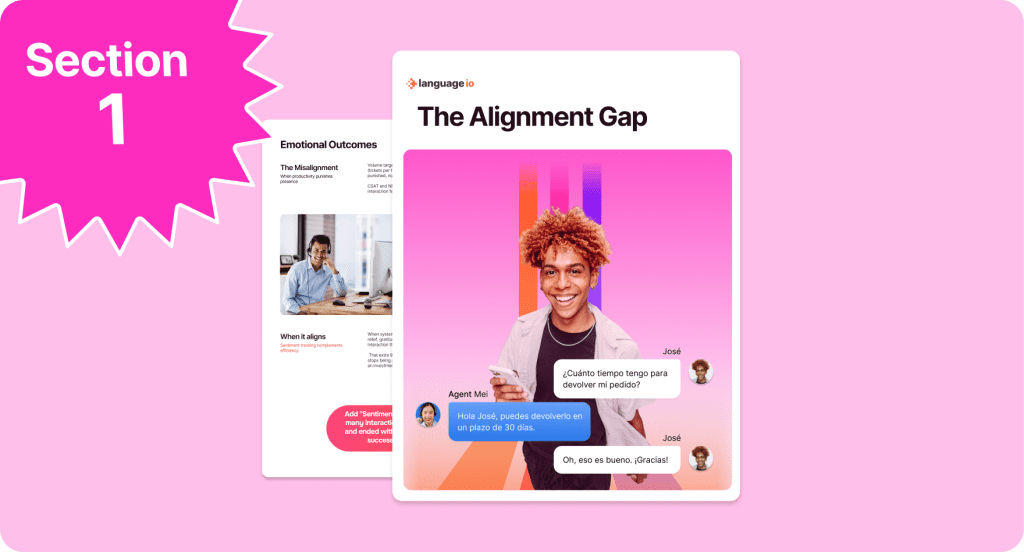
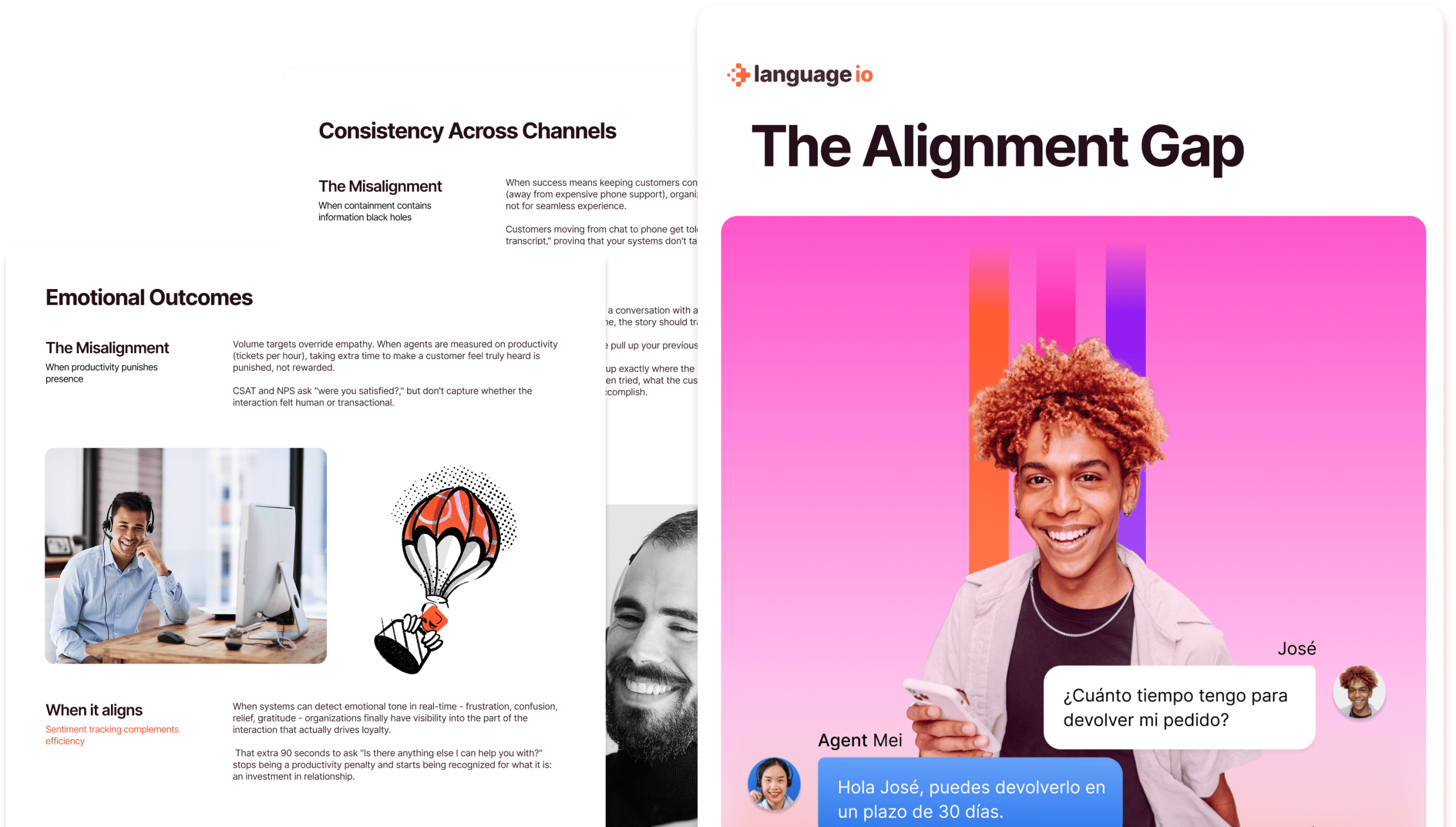
The Alignment Gap: When Metrics Measure Everything But What Matters
Stop optimizing for numbers that sabotage the experiences customers actually value. This guide reveals the seven critical places where traditional CX metrics directly conflict with the experiences that build trust and loyalty and shows you exactly how to close those gaps.
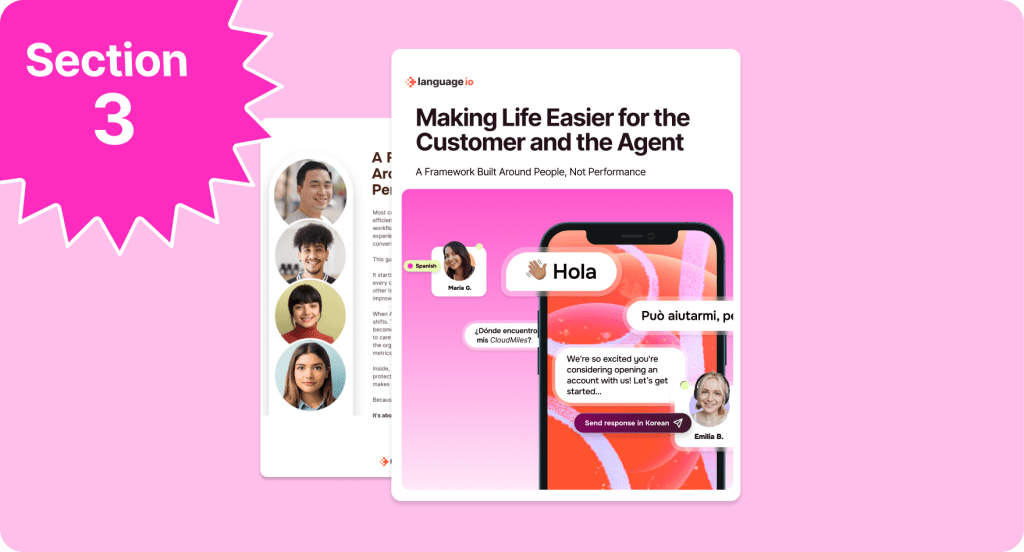
Making Life Easier for the Customer and the Agent
Most AI strategies optimize for speed. The best ones protect something more important. This guide is built around the premise: when AI is designed to make life easier for everyone in the conversation, something shifts.
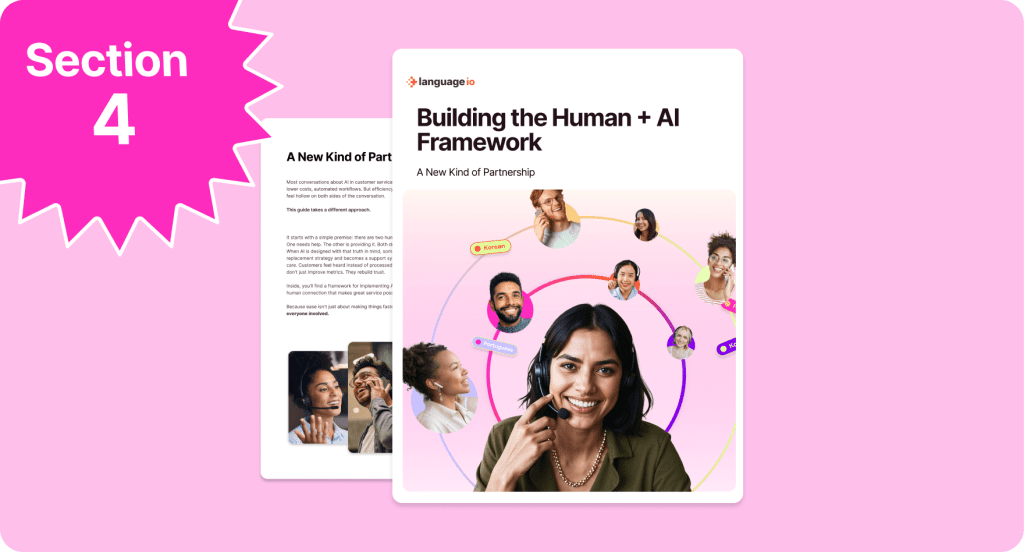
Building the Human + AI Framework
There are two humans in every customer service interaction. One needs help. The other is trying to give it. Yet most AI conversations focus purely on automation metrics – deflection rates and handle times – ignoring the friction that makes empathy impossible. This guide shows you how to build a framework that serves both.
The Full Ebook: The Empathy Equation
Your Metrics Are Perfect. Your Customers Are Leaving Anyway. Discover the hidden conflicts between what you measure and what customers actually experience—and how to fix them.
Who This Guide is For
- CX Leaders who know there’s a better way than burning through agents every 18 months
- Contact Center Directors tired of watching stress levels climb while satisfaction scores stagnate
- Operations Managers searching for solutions that support agents instead of just monitoring them
- Customer Success Teams ready to design systems that protect both people in every conversation
- Anyone who believes service should be about dignity, not deflection
“The companies that win won’t be the ones with the most advanced AI. They’ll be the ones who use it to make both sides of every conversation more human.”
Section 2 of The Empathy Equation