Artificial intelligence is rapidly transforming industries, automating workflows, and making life easier for businesses and individuals alike.
But as AI becomes smarter, so do the cyber threats that target it. AI security is the digital armor that protects these powerful systems from data breaches, manipulations, and malicious attacks.
In this article, we’ll explore why AI security is essential, the risks involved, and best practices to keep AI-driven systems safe and reliable.
TL;DR
- Protection Against Cyber Threats: Safeguards AI systems from data breaches, adversarial attacks, and unauthorized access to sensitive information.
- Data Integrity & Privacy: Ensures the protection of sensitive data through encryption, compliance with privacy laws, and secure AI model management.
- Enhanced Threat Detection: Utilizes AI-powered security tools to detect threats in real time, enabling faster response and minimizing potential damage.
- Compliance with Industry Standards: Aligns AI systems with regulations such as GDPR, HIPAA, and PCI DSS to ensure ethical and legal use of AI technologies.
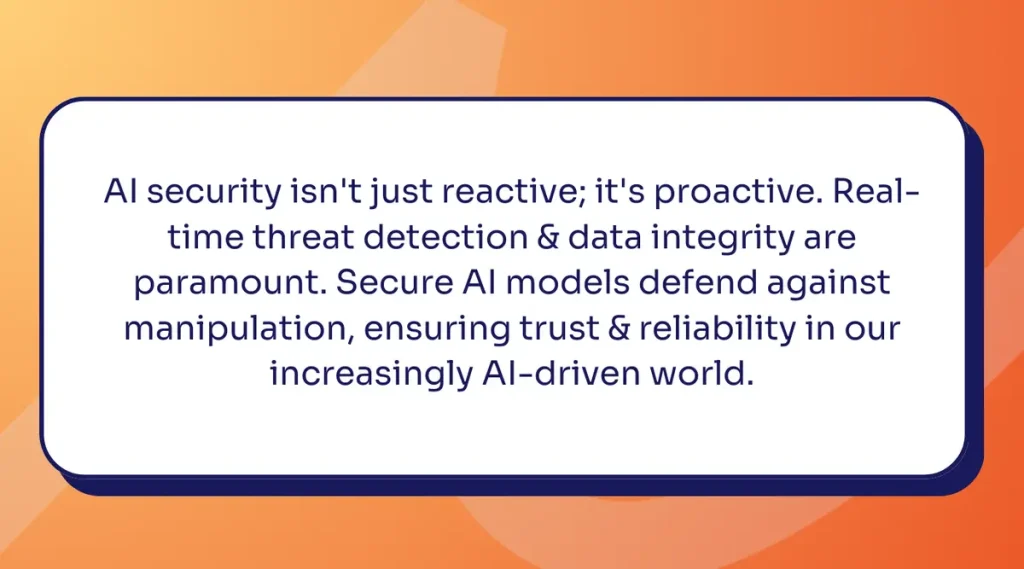
What Is the Role of AI Security?
AI security refers to the policies, frameworks, and technologies designed to safeguard artificial intelligence systems from threats, vulnerabilities, and misuse. Just like humans need security measures to protect their identities and personal data, AI needs robust safeguards to ensure it functions accurately, ethically, and securely.
AI security covers everything from protecting sensitive training data to ensuring that AI models can’t be manipulated or exploited for harmful purposes.
The Role of AI Security in Business Operations
AI security is critical for businesses leveraging AI for customer service, data analysis, or automation. Language IO provides AI-driven multilingual customer support and ensures that translations are both secure and accurate. This prevents unauthorized access to sensitive customer communications and maintains compliance with data privacy laws like GDPR and CCPA.
Without strong AI security, businesses risk not only data breaches but also reputational damage that could significantly impact customer trust.
The Role of AI Security in Customer Support
Companies like Language IO leverage AI to provide secure, multilingual customer service solutions. By incorporating AI security measures, Language IO ensures that translations of sensitive customer data remain encrypted and not stored in its database, protecting this data from cyber threats. This level of security is crucial for businesses operating in highly regulated industries such as finance, healthcare, and e-commerce.
The Importance of Security for AI
As AI plays an increasing role in industries like finance, healthcare, and national security, ensuring its protection has never been more crucial. An AI model processing sensitive financial transactions or diagnosing medical conditions needs ironclad security to prevent breaches, corruption, or unauthorized access.
Without strong AI security measures, bad actors could manipulate models to spread misinformation, hijack AI-powered automation systems, or even cause large-scale disruptions in critical infrastructure. The need for AI security isn’t just a luxury—it’s a necessity for the digital age.
The Scope of Security in AI
AI security covers a vast landscape, ensuring AI operates safely, fairly, and without falling victim to cyber threats. Some of the key areas include:
Data Integrity
AI models thrive on data, and if that data is corrupted or altered maliciously, the system’s outputs can become dangerously inaccurate. Ensuring data integrity means protecting datasets from manipulation, poisoning, or unauthorized changes.
Language IO relies on secure AI models to process multilingual data accurately, preventing language-based manipulation that could lead to mistranslations or miscommunication.
Algorithmic Reliability
If an AI system makes critical decisions—such as approving a loan or diagnosing a disease—algorithmic reliability is non-negotiable. Security measures must ensure that AI remains consistent and free from biases or external manipulations that could compromise its decision-making process.
User Privacy
AI systems often process vast amounts of personal data. Whether it’s a chatbot handling customer queries or a recommendation engine analyzing shopping habits, privacy regulations like GDPR and CCPA require strong security measures to protect user information.
Model Security
A model trained for facial recognition or fraud detection must be protected from adversarial attacks where hackers subtly manipulate inputs to force incorrect outputs. This involves safeguarding against AI model theft, unauthorized modifications, or intentional bias injections.
Compliance and Standards
Different industries have different compliance requirements when it comes to AI. Whether it’s HIPAA for healthcare AI or PCI DSS for financial AI, security measures must align with industry-specific regulations to avoid legal repercussions.
Language IO adheres to the strictest security standards in the industry, ensuring customers’ conversations and data are protected. Our platform is built to exceed the requirements of ISO 27001:2022, SOC II, GDPR, CCPA, HIPAA, PCI, and the EU-US Data Privacy Framework.
Security in an AI-driven landscape
A practical guide for CX leaders
Benefits of AI Security
AI security tools and systems allow organizations and companies to detect and protect against potential threats, cyberattacks, and data breaches. Some of the benefits of AI security include:
Enhanced Threat Detection
AI security tools help detect cyber threats in real time, allowing organizations to react before an attack causes significant damage. AI-driven security systems analyze patterns and anomalies in data traffic, identifying potential breaches faster than traditional security solutions.
Faster Incident Response
With AI security in place, organizations can automate responses to potential threats, minimizing downtime and damage. This means security teams can focus on more complex threats while AI handles immediate risk mitigation.
Greater Operational Efficiency
By implementing AI security, businesses can streamline security processes, reduce the workload for human analysts, and ensure that AI-powered applications continue to function smoothly without disruption.
Artificial Intelligence Security Frameworks
Various AI security frameworks help organizations develop secure AI models. These frameworks define best practices for securing AI applications, including guidelines for encryption, adversarial attack mitigation, and compliance with ethical AI standards. Organizations rely on these frameworks to implement AI security effectively while maintaining compliance with evolving industry regulations.
Security Risks of AI
With AI technology comes some security risks and vulnerabilities if these aren’t safeguarded against. Some common security risks of AI include:
Data Breaches and Leaks
AI systems store vast amounts of sensitive data, making them prime targets for cybercriminals. Without proper encryption and access controls, AI databases can be breached, leading to severe privacy violations.
Language IO uses state-of-the-art encryption to protect customers’ data and is the only translation platform with zero data retention.
Chatbot Credential Theft
Hackers can exploit AI-driven chatbots and applications to steal credentials and sensitive customer information. If a chatbot lacks security mechanisms, it can become an easy entry point for phishing attacks and identity fraud.
Language IO ensures that all personally identifiable information (PII) is protected. When a message comes in, Language IO automatically identifies the parts of the message that are PII and masks it before it goes to the translation provider.
AI and Security: Key Takeaways
AI security is critical in today’s digital world, protecting AI models from data breaches, cyber threats, and manipulation. From securing personal data to ensuring algorithmic integrity, strong security measures ensure AI remains reliable and trustworthy.
By implementing security best practices and leveraging AI security frameworks, businesses can reduce risks and maximize the benefits of AI-driven technologies. Language IO provides AI-powered solutions for multilingual support and beyond, practicing AI security measures that ensure organizations remain safe and risk-free.
FAQs
What is the biggest AI security risk?
One of the biggest AI security risks is data poisoning, where attackers manipulate an AI model’s training data to produce biased or incorrect outputs. This can lead to misinformation, security breaches, or even compromised decision-making in critical applications like finance and healthcare.
What is the difference between AI Security and Cybersecurity?
AI security focuses on protecting artificial intelligence systems from vulnerabilities like data manipulation, adversarial attacks, and model theft. Cybersecurity, on the other hand, is a broader field that includes securing networks, devices, and digital assets against all forms of cyber threats, including those affecting AI systems.
What is a key focus of AI security?
A key focus of AI security is ensuring data integrity, privacy, and resilience against adversarial attacks. Protecting AI models from biases, tampering, and data breaches is essential for maintaining accuracy and trustworthiness in AI-powered applications.
Can AI prevent cyber attacks?
Yes, AI can enhance cybersecurity by detecting threats faster than traditional methods. AI-driven security tools analyze data patterns to identify anomalies, detect phishing attempts, and prevent breaches before they escalate into full-scale cyber attacks.
How big is the AI security market?
The AI security market is rapidly expanding, with global spending projected to reach billions of dollars as businesses invest in AI-driven threat detection, automated security response, and compliance tools. As AI adoption increases, so does the demand for robust security solutions to protect these systems.