Let’s be honest—contact centers haven’t always been the coolest kids on the tech block. But that’s changing. Fast.
Thanks to digital transformation, today’s contact centers are smarter, faster, and positioned as strategic business drivers.
We’re talking AI that predicts what customers need before they ask, platforms that empower agents to work globally, and tools that make onboarding and scaling less operationally intensive and more ROI-driven.
In this guide, we delve into what contact center transformation truly means in 2025, why it matters more than ever, and how Language IO empowers enterprises to meet evolving customer expectations without incurring linearly scaling costs.
TL;DR
- Digital transformation in contact centers involves reimagining customer service through the use of cloud, AI, automation, and omnichannel strategies.
- It boosts efficiency, enhances personalization, and enables real-time, multilingual support through modern platforms and smarter workflows.
- The most effective transformations are strategically led, prioritize scalability, and leverage partners like Language IO to eliminate global communication barriers.
What Is Contact Center Transformation?
Contact center transformation refers to the shift from traditional, siloed service operations to digitally connected, intelligent systems that prioritize customer experience (CX).
This isn’t just a tech upgrade—it’s a strategic evolution. It involves cloud migration, omnichannel integration, AI-enablement across every touchpoint, and embedding automation deeply into daily operations.
The automation rate in agent-customer communication is projected to increase fivefold, from 1.8% of agent interactions in 2022 to approximately 10% of agent interactions by 2026.
Instead of reacting to calls and emails, digital contact centers predict customer needs, offer personalized self-service, and empower agents with the multilingual, real-time context needed to solve problems proactively.
The goal? Seamless, scalable, and proactive customer support that drives loyalty, operational efficiency, and global market readiness.
How Does Digital Transformation Impact a Contact Center?
Digital transformation touches every corner of the contact center. It empowers teams with real-time data, automates repetitive tasks, and breaks down the barriers between channels, such as phone, chat, email, and social media.
The result is more consistent support across touchpoints, faster resolutions, and happier customers.
At the enterprise level, this isn’t about “support”—it’s about building revenue-resilient, customer-centric organizations.
Agents become advisors, not just responders. Managers gain immediate insights into customer sentiment and call center agent performance metrics.
And customers? They get seamless multilingual service at enterprise scale, enabled by technologies like Language IO’s real-time translation integrations.
Benefits of Digital Transformation in Contact Centers
The future of contact centers involves reimagining customer service through the use of cloud, AI, automation, and omnichannel strategies.
But what are the benefits of a digital contact center strategy? Let’s take a closer look at the advantages of an artificial intelligence call center.
1. Increased Efficiency
Let’s face it: no one got into customer service to manually assign tickets or retype the same response 200 times a day.
Enter intelligent automation.
With AI routing, ticket triaging, and knowledge-base integrations, agents can finally stop playing digital whack-a-mole and focus on strategic customer interactions.
At the enterprise level, operational efficiency directly impacts margins, and automation isn’t a luxury—it’s a necessity.
For example, many Language IO customers utilize AI-powered translation to provide seamless multilingual support without requiring dedicated language-specific agents.
This dramatically reduces operational overhead while ensuring global customers feel just as supported as local ones.
2. Improved Training and Onboarding
Say goodbye to 300-page PDFs and awkward shadowing sessions.
Modern contact center platforms now deliver onboarding that is dynamic, context-driven, and measurable.
AI can coach new agents in real time, flag mistakes, and reinforce best practices.
Language IO’s multilingual AI tools extend these benefits globally, accelerating ramp-up times for agents across regions without diluting quality or brand voice.
The result? Faster productivity, lower turnover, and agents who are equipped to deliver on strategic KPIs from day one.
3. Access to Real-Time Data
Remember when managers had to wait until the end of the week for performance reports? Ancient history.
Now, real-time dashboards enable leaders to monitor queue lengths, CSAT dips, and agent performance as they occur, allowing for proactive intervention rather than reactive firefighting.
With Language IO’s real-time translation integrations, customer sentiment and intent aren’t lost between languages, meaning every data point is accurate and actionable globally.
4. Reduced Friction
Customers don’t want to explain their problem three times to three different people. This is where omnichannel customer engagement comes in.
When systems are connected—CRM, chat, voice, email—there’s no more starting over, no more “let me transfer you,” and definitely no more rage-quitting support chats. Agents will know the customer’s purchase history and be able to handle requests promptly across communication channels.
For agents, it’s a dream. For enterprises, it’s a differentiator. It’s little wonder that the omnichannel customer engagement market’s annual growth is forecasted at 13%, reaching a revenue of nearly $18 billion by 2030.
With omnichannel integration and CRM access, plus Language IO’s instant multilingual support, agents know who they’re talking to, what they need, and how to solve it before a word is spoken.
The language of innovation
Why and how to gain your customers’ trust with your AI and digital transformation strategy
How to Build Your Digital Contact Center Strategy
Now we’ve seen the benefits of digital transformation in contact centers, let’s explore how you can set the wheels of your own digital contact center strategy in motion.
1. Set Clear Goals
Every transformation starts with one critical question: What business outcomes are we targeting?
Maybe it’s lowering churn by 10%, increasing NPS by 15 points, or enabling 24/7 multilingual support without expanding headcount.
Clear, executive-aligned KPIs define success and focus resource investment.
2. Earn Stakeholder Buy-In
Digital transformation isn’t just an IT project—it’s an organizational shift.
To earn support, tie initiatives to strategic outcomes: faster customer resolutions, expanded global reach, reduced agent attrition.
Demonstrate how Language IO’s technology enables these outcomes cost-effectively, and you’ll move from initiative to imperative.
3. Start With Quick Wins
Trying to transform everything at once is a recipe for scope creep and executive fatigue.
Instead, secure quick wins—automate high-volume tasks like password resets, introduce real-time translation for top-tier support queues, or pilot AI-driven coaching tools.
These quick wins validate the initiative’s impact, build internal champions, and create momentum.
4. Plan for Scalability
Your contact center might support 500 agents today, but what about 5,000 next year?
Enterprise-ready solutions must scale elastically without disrupting existing operations.
Choose CCaaS platforms and API-driven integrations that allow you to add languages, channels, and markets easily, as Language IO enables without requiring new infrastructure investments.
Technologies That Shape the Digital Future of Contact Centers
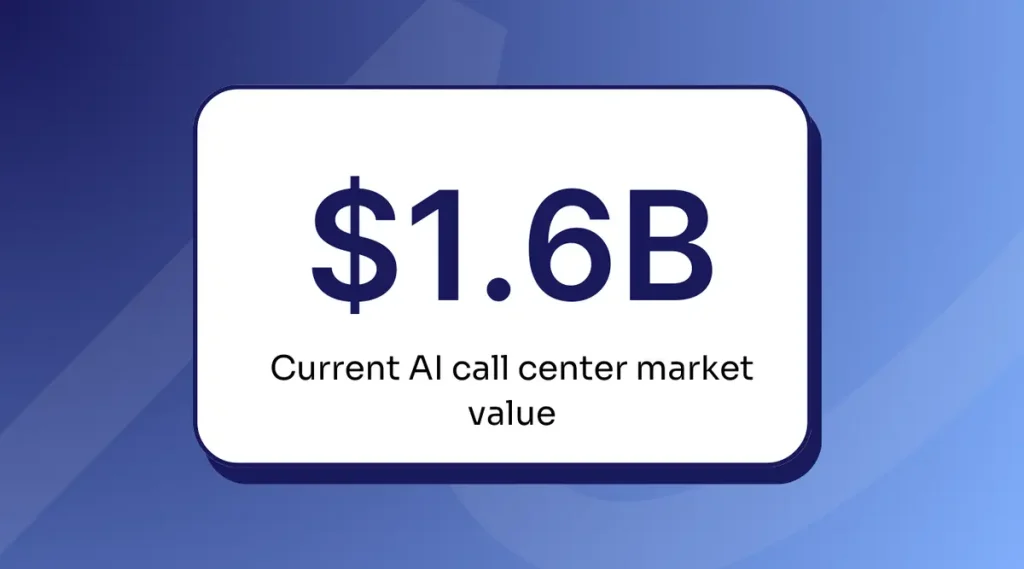
As we’ve seen, the future of contact centers is digital. The global AI call center market is currently valued at $1.6 billion, and by 2027, it’s projected to exceed $4 billion.
But what are the technologies that’ll play a significant role in this? Let’s take a look.
Intelligent Automation (IA)
Intelligent Automation blends robotic process automation (RPA) with machine learning to handle backend tasks with increasing sophistication.
It’s not just faster—it’s smarter. Enterprises that deploy IA see fewer escalations, reduced handling times, and improved compliance.
Contact Center as a Service (CCaaS)
Cloud-native CCaaS platforms centralize contact center operations, enabling flexibility, agility, and built-in innovation.
Leading enterprises leverage platforms like Genesys Cloud or NICE CXone and integrate real-time services like Language IO to ensure consistent, multilingual customer experiences globally.
CRM and CX Platforms
CRM and CX tools aren’t just systems of record—they’re dynamic engines for predictive engagement.
When integrated with Language IO’s translation layers, these platforms ensure customer context isn’t lost across languages or borders, turning data into a competitive advantage.
Natural Language Processing (NLP)
Natural Language Processing powers AI’s ability to understand customer tone, emotion, and intent.
It enables intelligent escalation, sentiment-aware responses, and smarter bots.
Enterprise-grade NLP must be multilingual and contextually sensitive, which is where Language IO enhances traditional NLP engines with true multilingual understanding at scale.
Challenges of Call Center Digital Transformation
Call center digital transformation offers numerous advantages, but, like any change, it also brings its own set of challenges.
Complex Technology Migrations
Migrating legacy systems is never simple. Enterprises must map timelines, layer testing protocols, and anticipate failure points to succeed.
Partnering with experienced vendors and integration specialists—including Language IO—reduces risk and accelerates time-to-value.
Employee Adoption
Technology adoption fails without agent trust.
Change management strategies must focus on empowerment, not enforcement.
Training, transparency, and demonstrating how tools like Language IO enhance, not threaten, agent roles are key to successful transformation.
Disconnected Technologies
Disconnected technologies are one of the most critical barriers to contact center transformation at scale.
When CRM systems, chat platforms, voice solutions, and analytics tools operate in silos, customer data becomes fragmented, agent workflows slow down, and service consistency deteriorates.
At the enterprise level, these inefficiencies multiply exponentially, leading to duplicated effort, incomplete customer histories, higher operational costs, and lower CSAT scores.
Siloed systems also make it impossible to deliver true omnichannel experiences, as customers are forced to reintroduce themselves at every new touchpoint.
The goal isn’t just integration—it’s orchestration: ensuring that every customer interaction, whether via voice, email, chat, or social, is informed, contextual, and frictionless in real time.
Misaligned Goals or Poor CX Insight
Without CX-driven insight, digital transformation initiatives often chase shiny objects instead of solving core problems.
Start with identifying customer pain points, validate them with real-time, multilingual data, and align all initiatives to drive measurable improvements.
Key Takeaways
Contact center transformation is no longer optional—it’s expected.
With the right strategy, technology, and enterprise-focused partners, digital transformation leads to smarter, faster, and more empathetic global support.
Language IO plays a vital role in enabling real-time multilingual communication, directly integrated into your CRM and CCaaS platforms, giving enterprises a decisive CX edge in every market they serve.
The enterprises that invest in transformation today will define customer experience excellence tomorrow.
FAQs
What is a digital contact center?
A digital contact center uses cloud platforms, AI, intelligent automation, and omnichannel strategies to deliver seamless, scalable customer service.
What are the key components of a digital contact center?
Key components include CCaaS platforms, integrated CRM/CX tools, AI-powered bots, NLP engines, and omnichannel communication layers, with translation and localization capabilities integrated at the core.
Why is digital transformation important for contact centers?
Digital transformation helps enterprises deliver faster, more personalized, and truly global service, reducing costs, improving retention, and increasing brand loyalty at scale.
For example, 71% of consumers expect companies to deliver personalized interactions, and 76% of them become frustrated when this expectation isn’t met. Utilizing technologies to ensure personalization and customer satisfaction is a no-brainer.
Whether it’s a multilingual call center with global reach or a smaller-scale set-up, digital transformation is the key to future success.