
The Fastest Growing Languages in Customer Support (And Why You Should Care)
It’s Not Just Spanish and French Anymore.
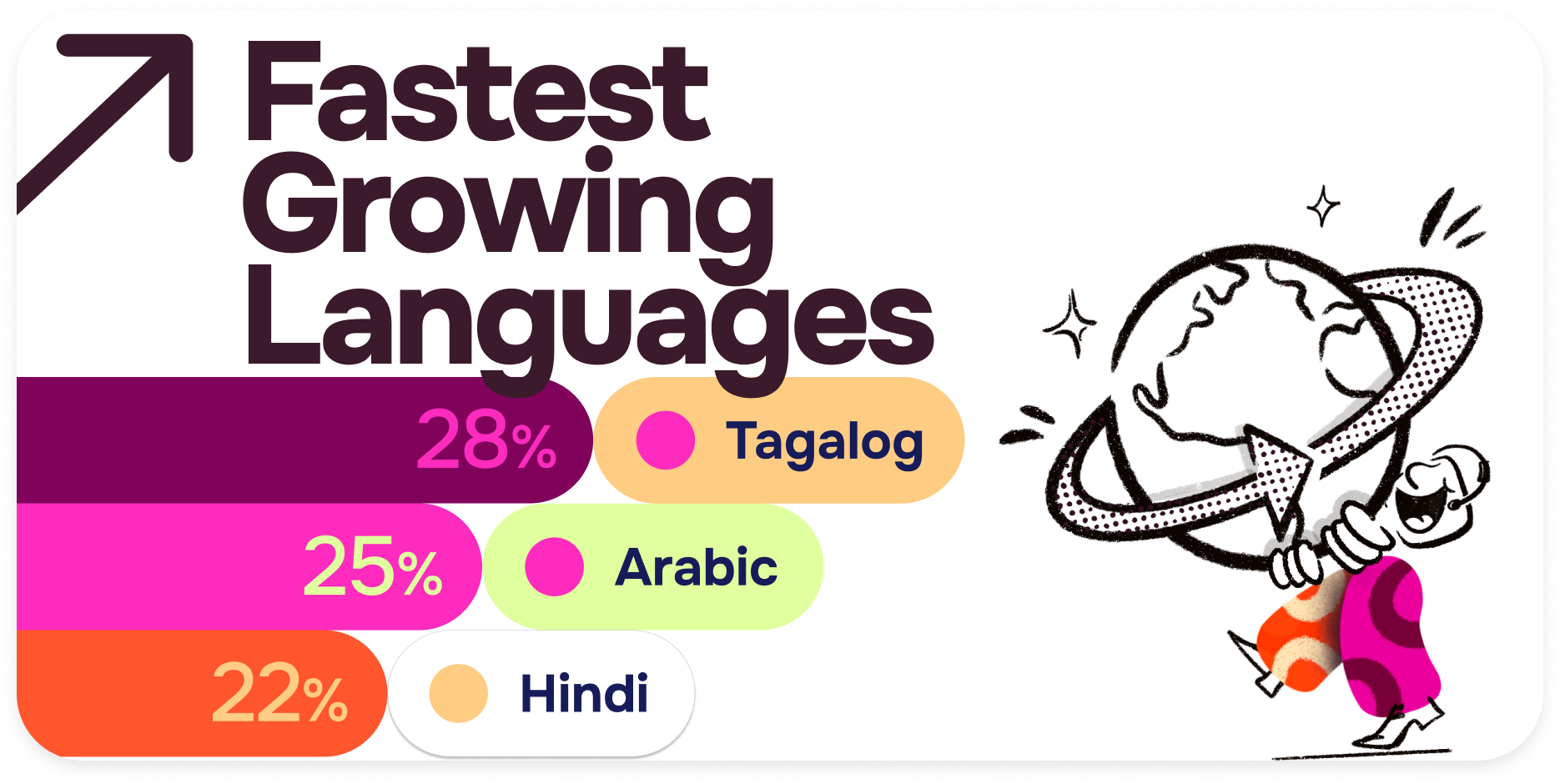
Table of Contents
For a long time, customer support teams have primarily focused on Spanish and French when expanding their multilingual offerings. These languages have traditionally dominated global customer service because of their widespread use across multiple continents.
But the story is changing fast.
Recent data reveals that languages such as Tagalog, Arabic, and Hindi are surging in demand. This isn’t just a passing trend, it reflects fundamental shifts in global demographics, migration patterns, and digital access.
Understanding these changes is crucial for customer support professionals, operations managers, and business strategists aiming to meet evolving customer expectations.
Language Demand Growth: The Numbers Behind the Shift
CSA Research reports that while Spanish and French still represent significant volumes of multilingual support requests, languages like Tagalog, Arabic, and Hindi have seen year-over-year (YOY) growth rates of 20-30% in customer support demand over the last two years.
For example:
- Tagalog grew by approximately 28% YOY.
- Arabic surged by 25%, fueled by increased internet penetration and economic growth in the Middle East and North Africa.
- Hindi saw a 22% increase, reflecting India’s expanding digital user base.

In contrast, Spanish and French showed more modest growth rates between 5-10%, signaling a maturing market for these languages.
The Business Impact of Multilingual Support
Supporting these emerging languages isn’t just about checking a box. Salesforce and Intercom have published data demonstrating the real-world ROI of multilingual customer service:
- Salesforce found that companies providing support in customers’ native languages experience a 25% higher customer satisfaction score on average.
- Intercom’s research shows that customers are 3 times more likely to remain loyal to a brand that communicates in their preferred language.
- Moreover, multilingual support correlates with a 15-20% reduction in churn rates and a significant uptick in repeat purchases.
These insights underscore a simple fact: speaking your customers’ language directly affects their experience, and your company’s bottom line.
Why Are These Languages Growing?
Several macro trends explain the rise in demand for these less traditionally prioritized languages:
- Demographic Shifts: Regions where Tagalog (Philippines), Arabic (Middle East, North Africa), and Hindi (India) are spoken are experiencing rapid population growth, coupled with expanding internet access and mobile device adoption. This means more customers in these languages are entering the digital marketplace every day.
- Migration and Diaspora Communities: Increasing global migration has created large diaspora communities worldwide. For instance, millions of Filipino and Arabic speakers live in the US, Canada, and Europe. These communities expect customer support in their native language, influencing support trends in those markets.
Digital Inclusion Efforts: Businesses are making conscious efforts to reach underserved markets and diversify their customer base. Offering support in these emerging languages is part of a broader commitment to accessibility and inclusivity.
What This Means for Customer Support Teams
These language trends carry important implications for customer support operations:
- Strategic Planning: Support teams should use data-driven approaches to identify which languages to prioritize next, balancing volume with growth potential.
- Resource Allocation: Hiring multilingual agents or investing in language technologies (like real-time translation) for high-growth languages can improve efficiency and customer experience.
- Training and Culture: Beyond language, understanding cultural nuances is critical. Support reps fluent in Arabic or Hindi need training in regional customs and communication styles to truly connect with customers.
To bring this data to life, imagine an interactive heat map showing YOY growth rates for different languages. While Spanish and French remain stable, hot spots appear over Tagalog, Arabic, and Hindi, signaling opportunities for early adopters to gain competitive advantage.
Final Thoughts
The fastest growing languages in customer support reveal a shifting global landscape shaped by demographic change, migration, and digital transformation. For companies committed to delivering excellent customer experiences, recognizing and adapting to these emerging trends isn’t optional, it’s essential.
By paying attention to languages beyond the traditional “big two,” support teams can better meet diverse customer needs, foster loyalty, and drive long-term success.
It’s not about adding more. It’s about doing it smarter.
Discover More
-
Superpower #7: Stay in Flow
No new tools. No context switching. No lost seconds.
-
Superpower #6: Always the Right AI – Every Time
AI without the compromises. The right model for the job. Never down.